The Collection Guide
Why Blend Linen with Cotton
A pure linen sheet can feel coarse against the skin at first. Blending linen with cotton keeps linen's breathability and natural texture while softening the hand-feel, so it's comfortable from the first night rather than requiring a long break-in period.
The Textured Look
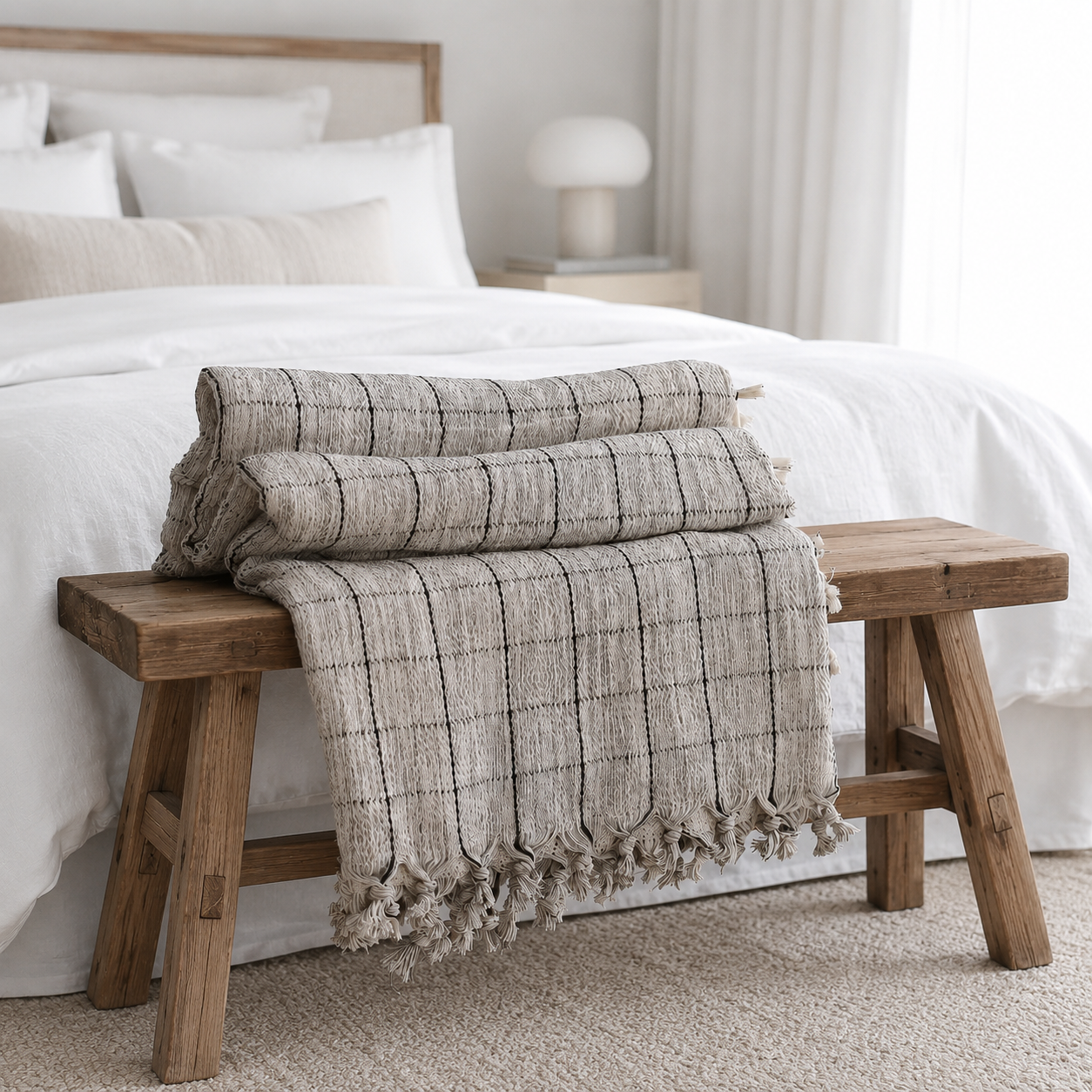
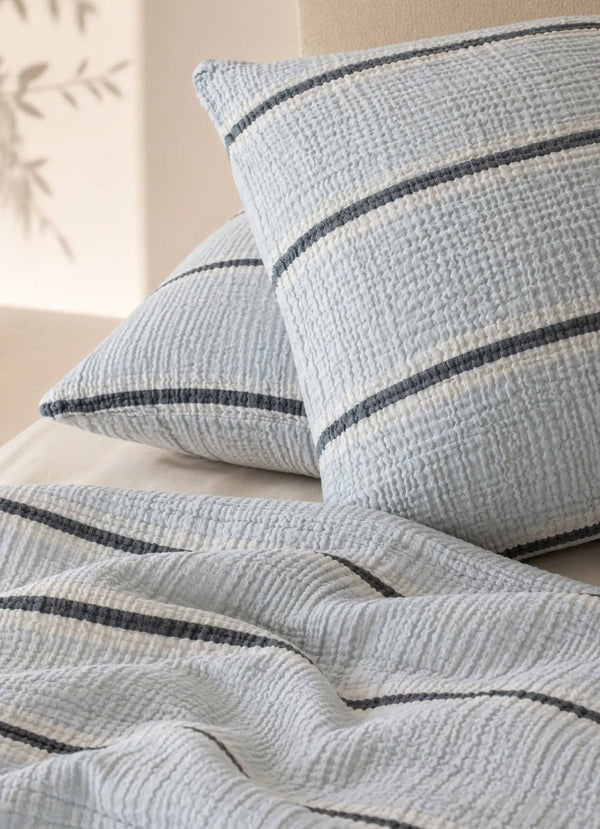
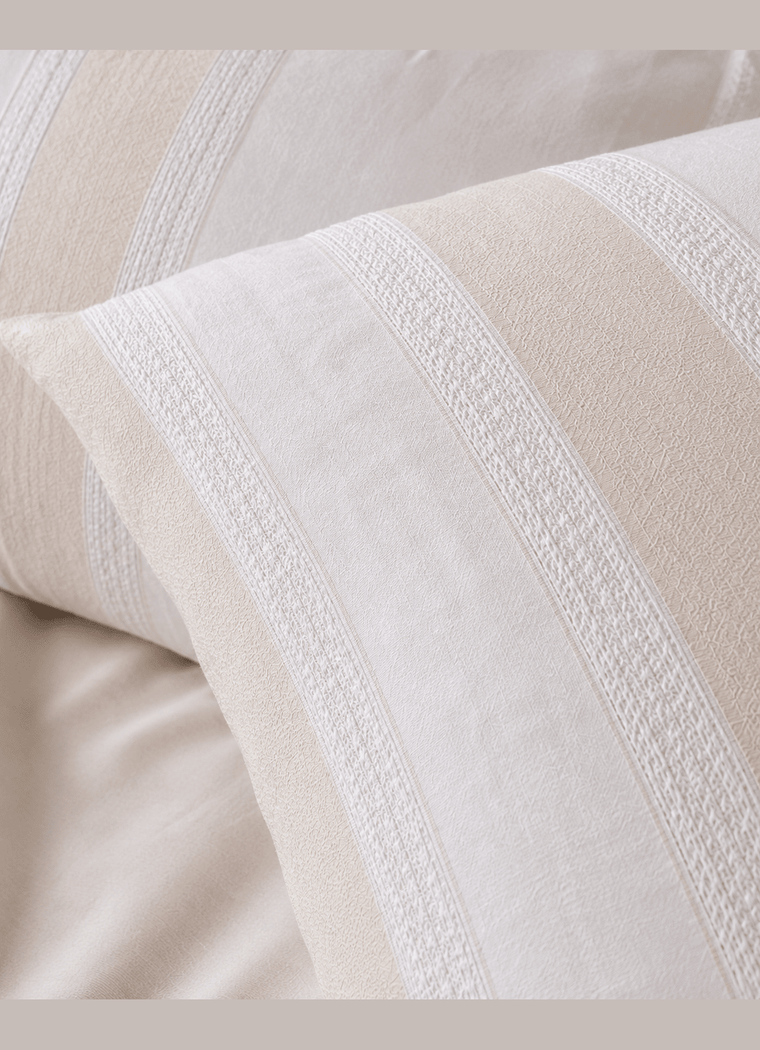
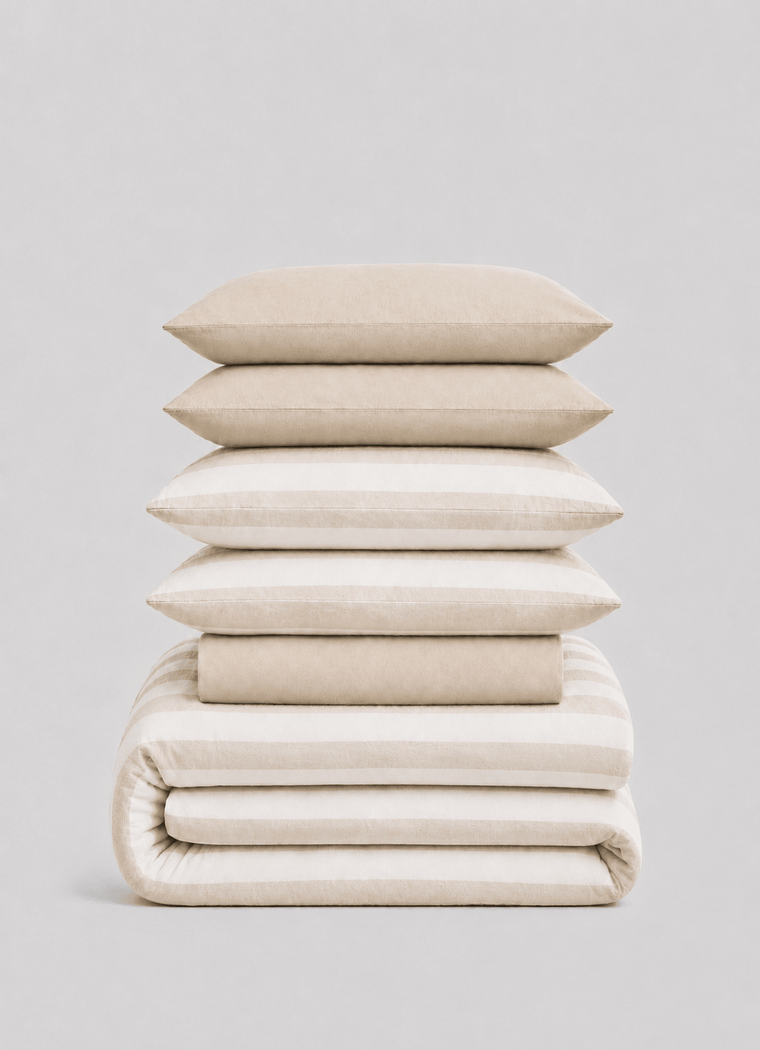
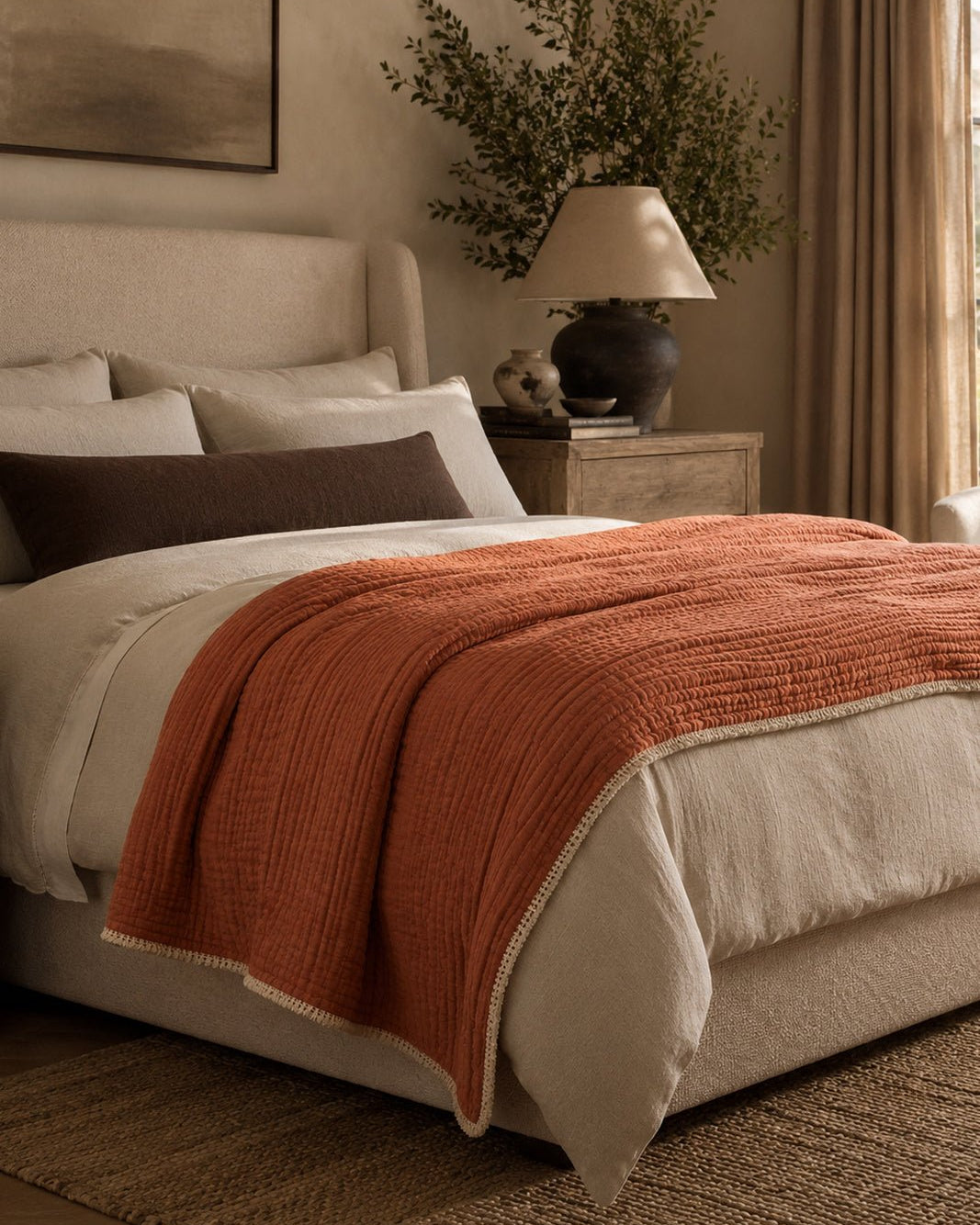
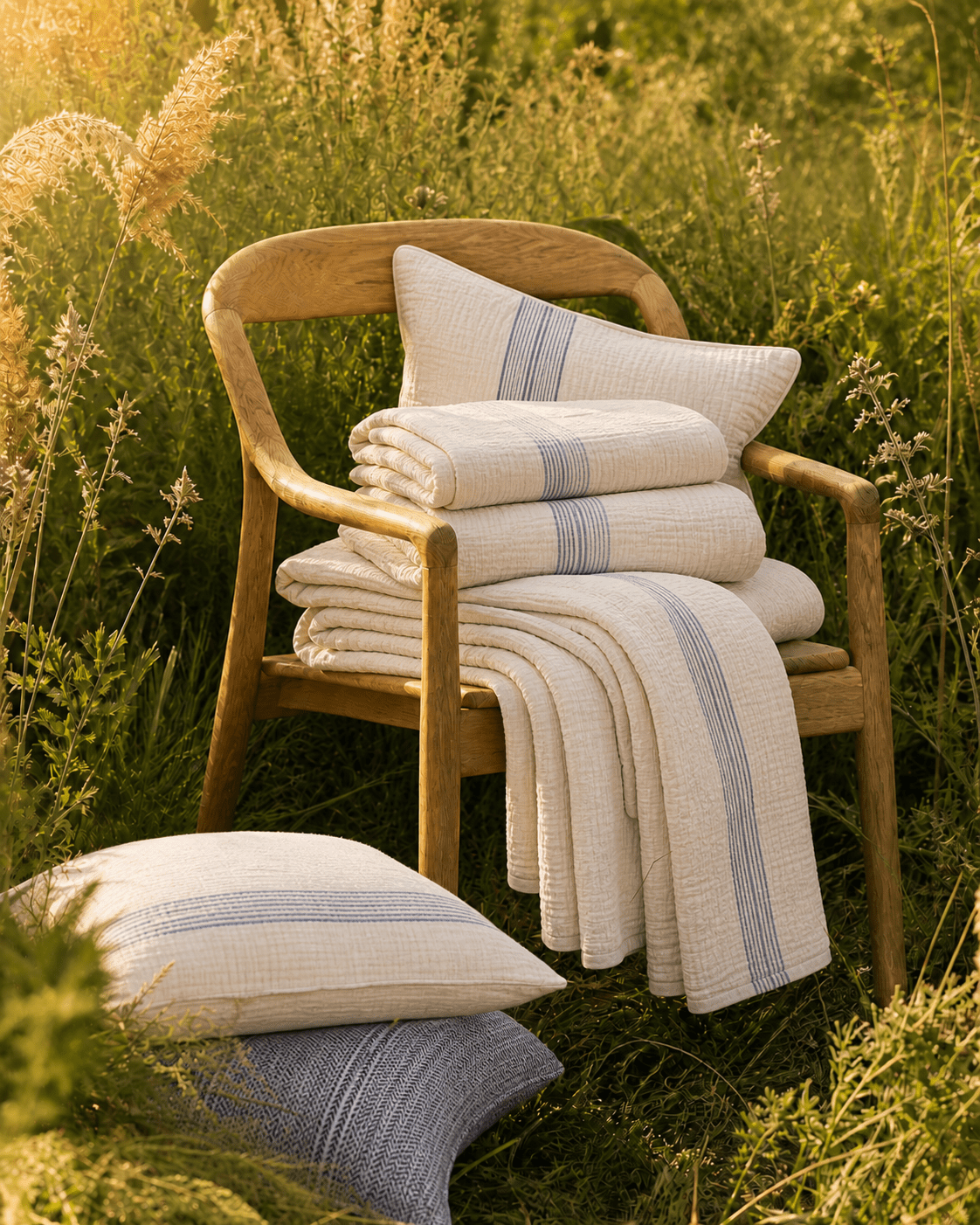
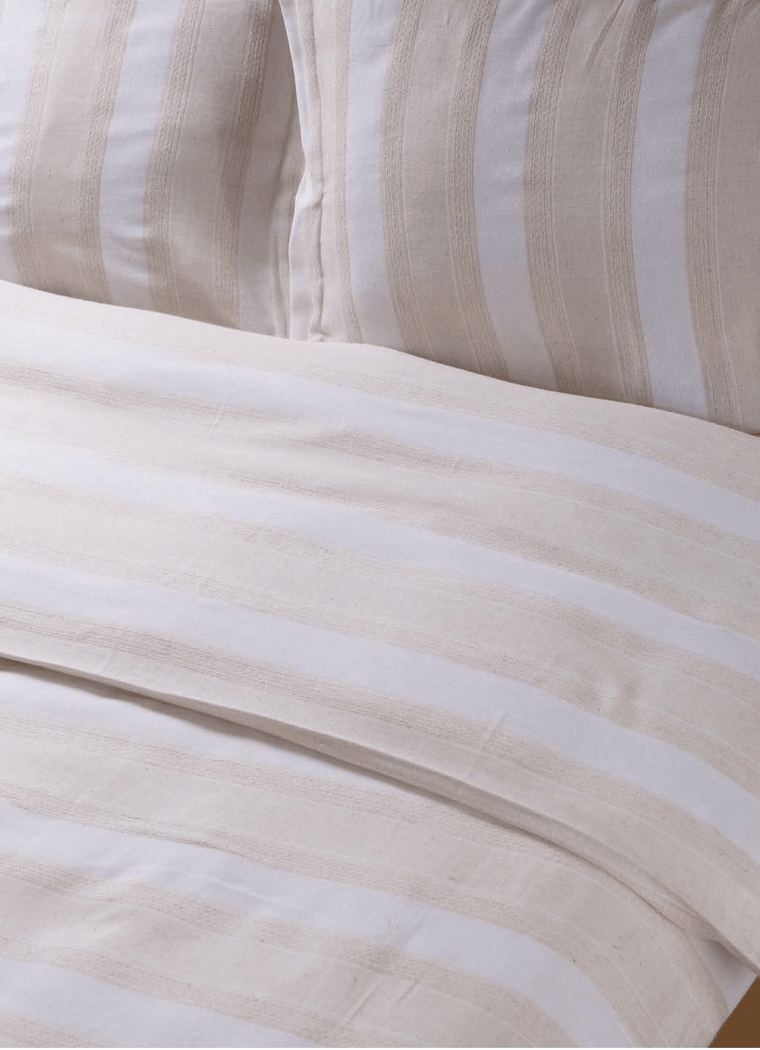
Linen-cotton blends have a naturally slubbed, woven-stripe texture that reads as relaxed rather than crisp. It's a look that improves with wear, developing a softer drape the more it's washed.
Temperature Regulation
Linen fibers are naturally moisture-wicking and help regulate temperature, making a linen-cotton blend a comfortable option across seasons — breathable in summer, with enough structure to layer under a blanket in winter.
Care and Longevity
Machine wash cold and tumble dry low. Linen blends soften significantly over the first several washes; a slightly rumpled, lived-in look after drying is part of the fabric's natural character.
Frequently Asked Questions
Is linen-cotton bedding scratchy like pure linen?
No — blending with cotton softens the hand-feel considerably compared to 100% linen, while keeping linen's breathability and texture.
Does linen-cotton bedding wrinkle easily?
Yes, some wrinkling is natural to the fiber and part of its relaxed, lived-in look rather than a flaw.
Is this bedding good for hot sleepers?
Yes, linen is naturally moisture-wicking and breathable, which helps regulate temperature through the night.
How do I wash linen-cotton bedding?
Machine wash cold and tumble dry low. It will continue to soften with each wash.
Does linen-cotton bedding need to be ironed?
No — a slightly textured, relaxed look is expected and part of the fabric's natural character.