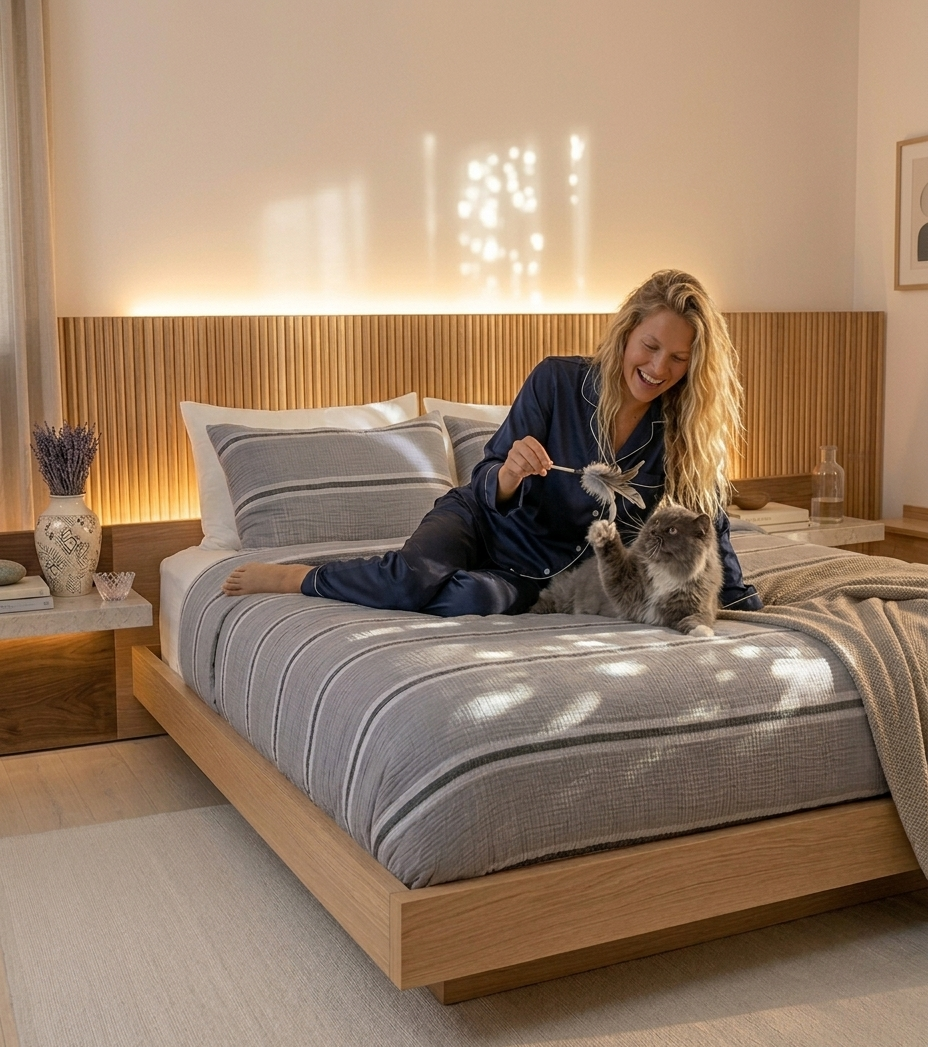
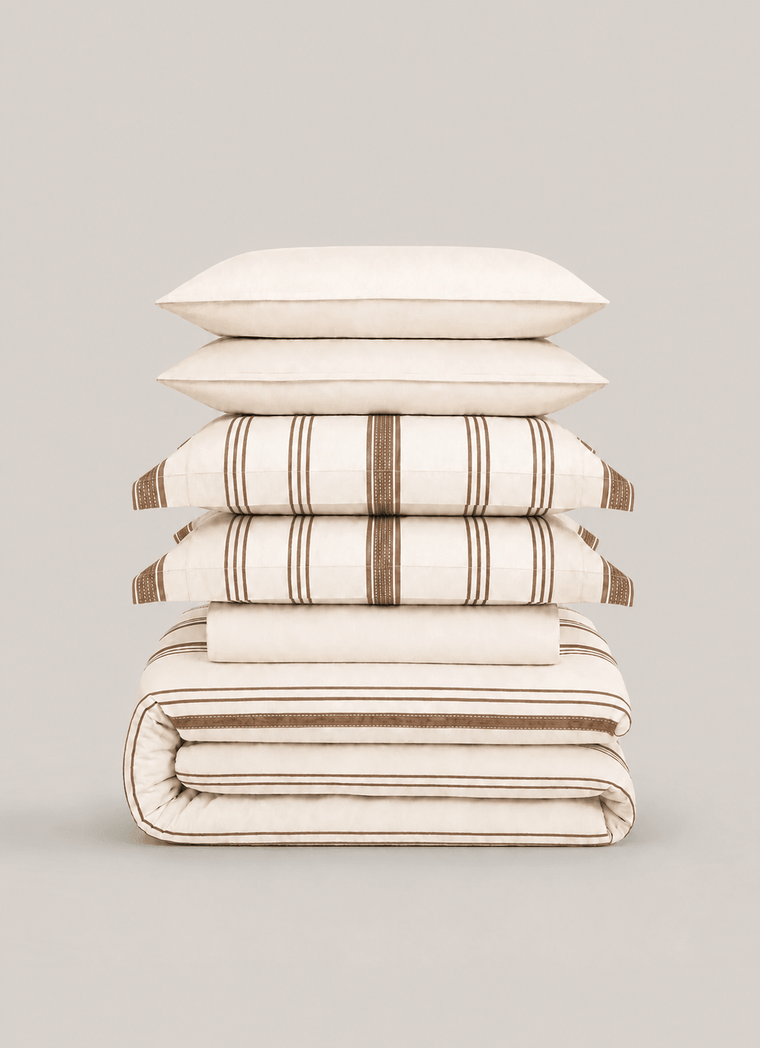
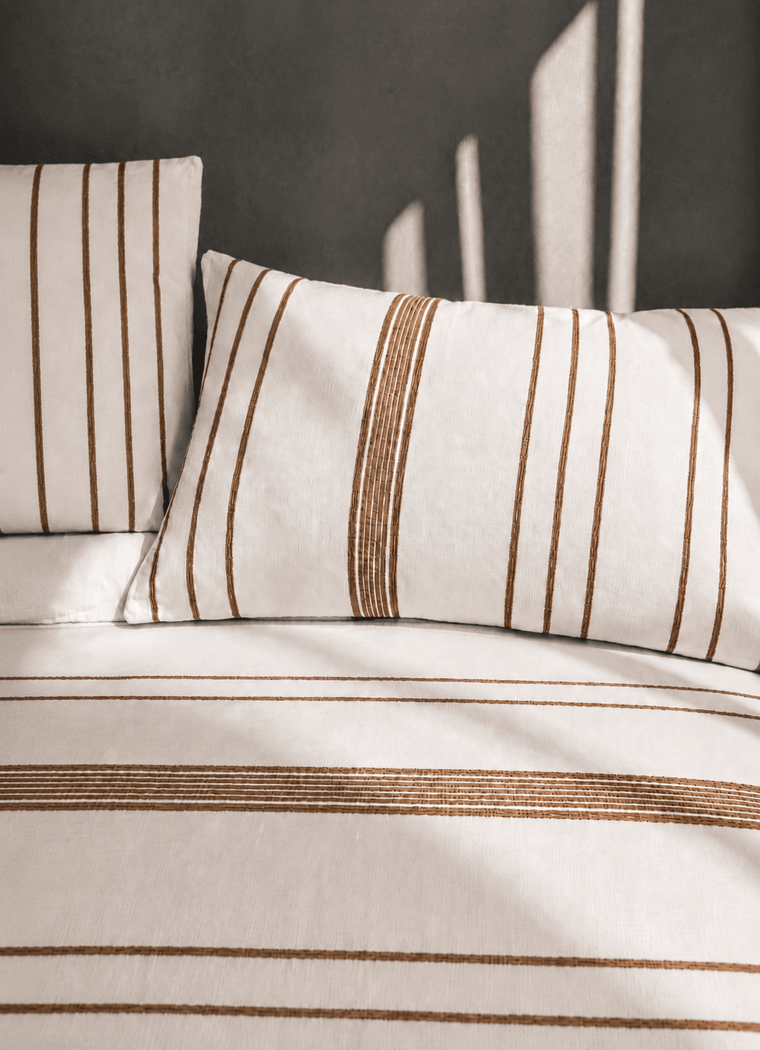
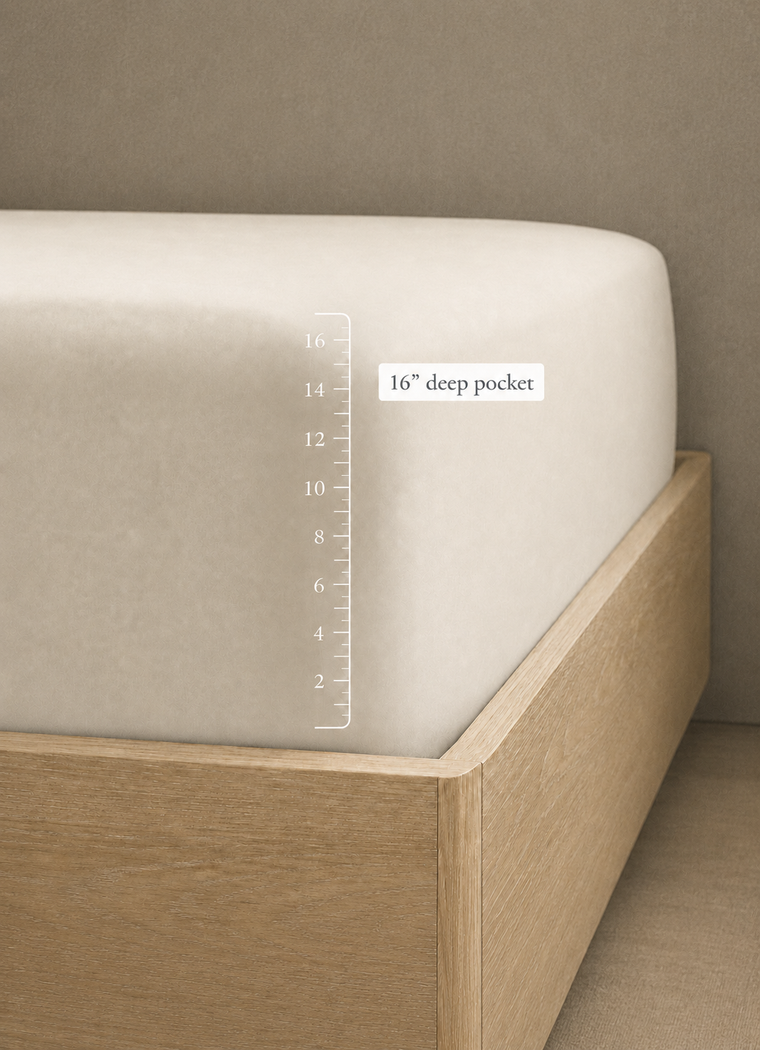
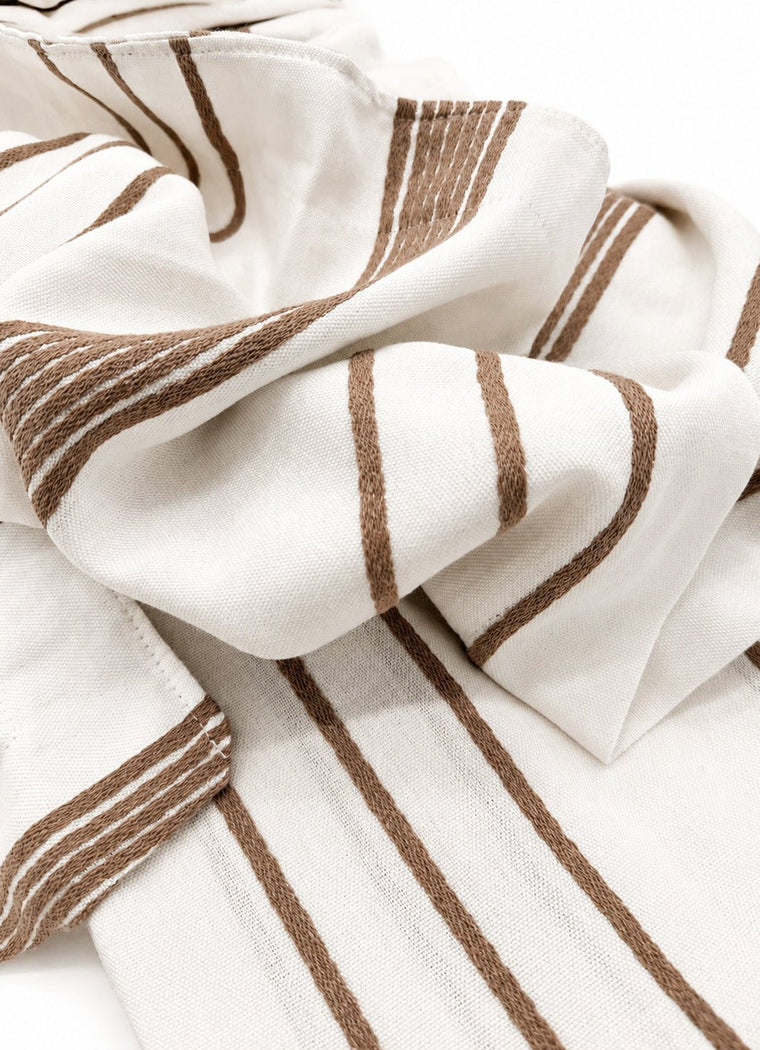
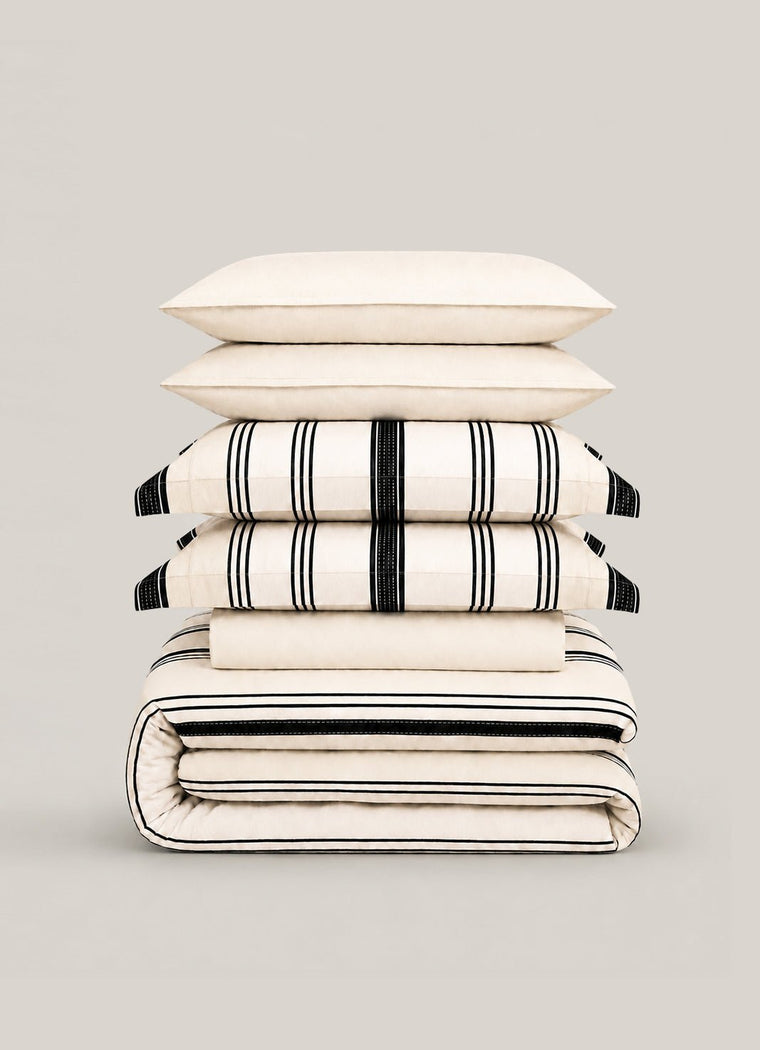
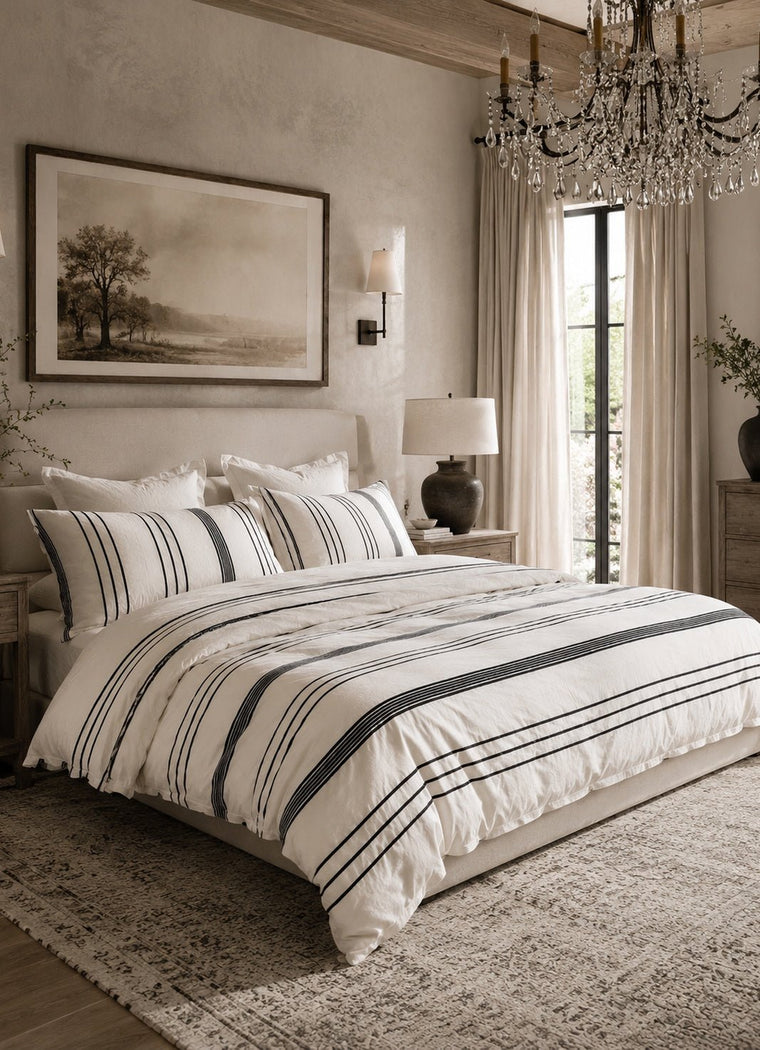
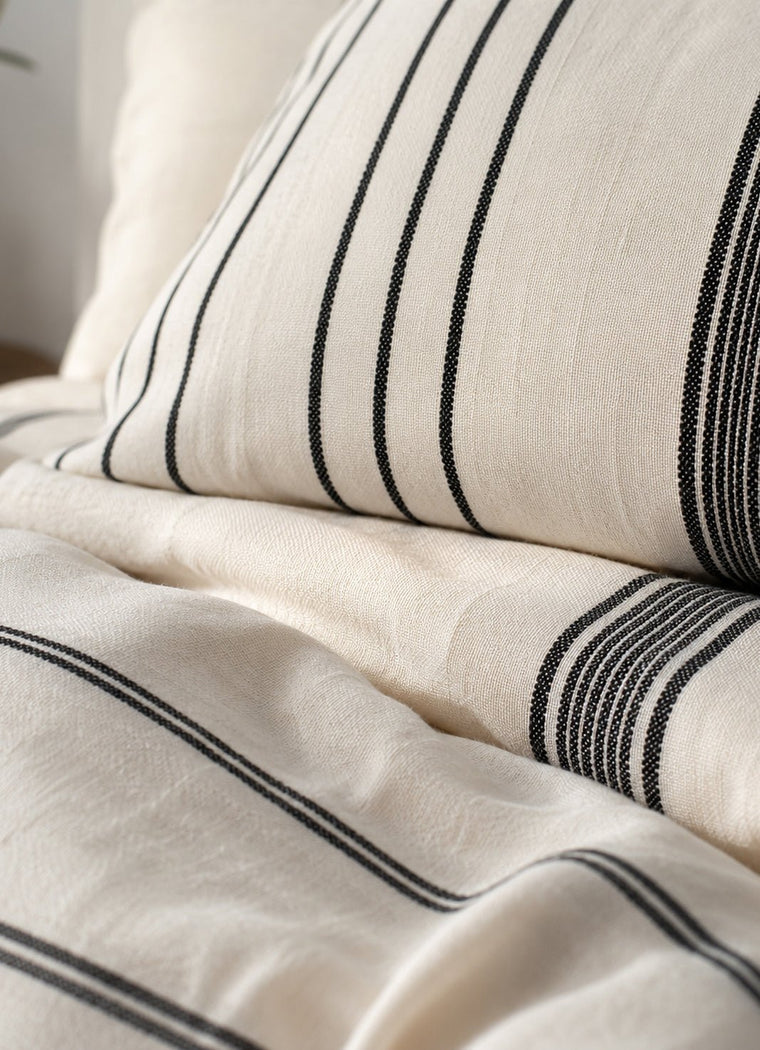
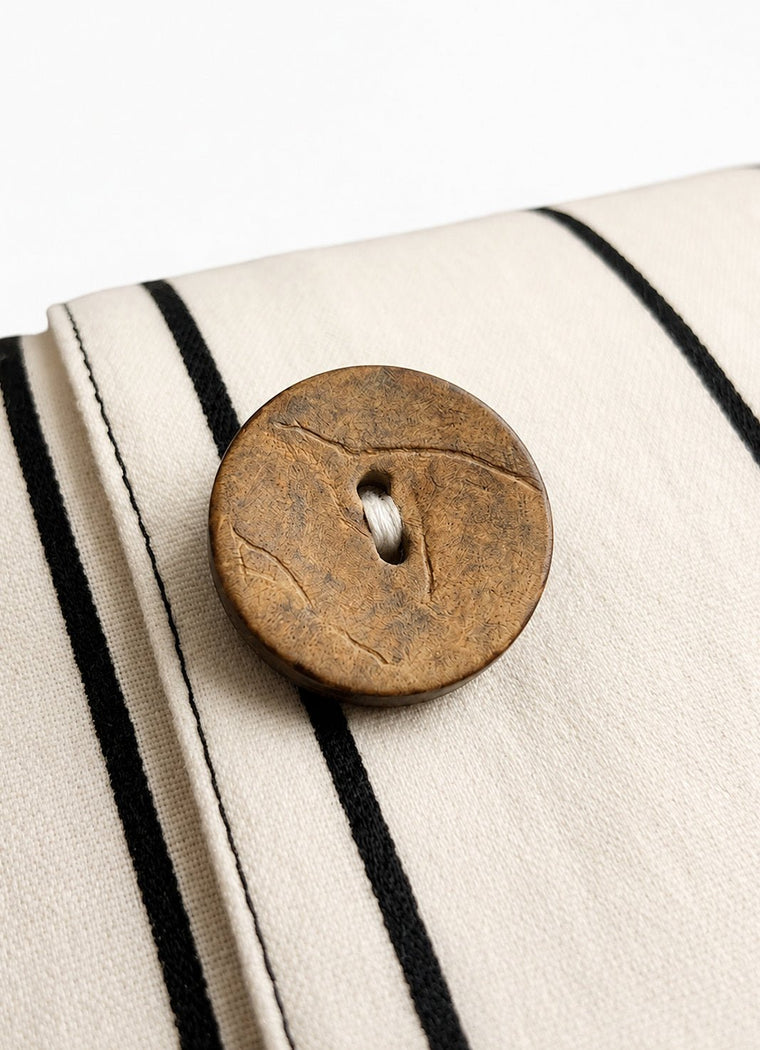
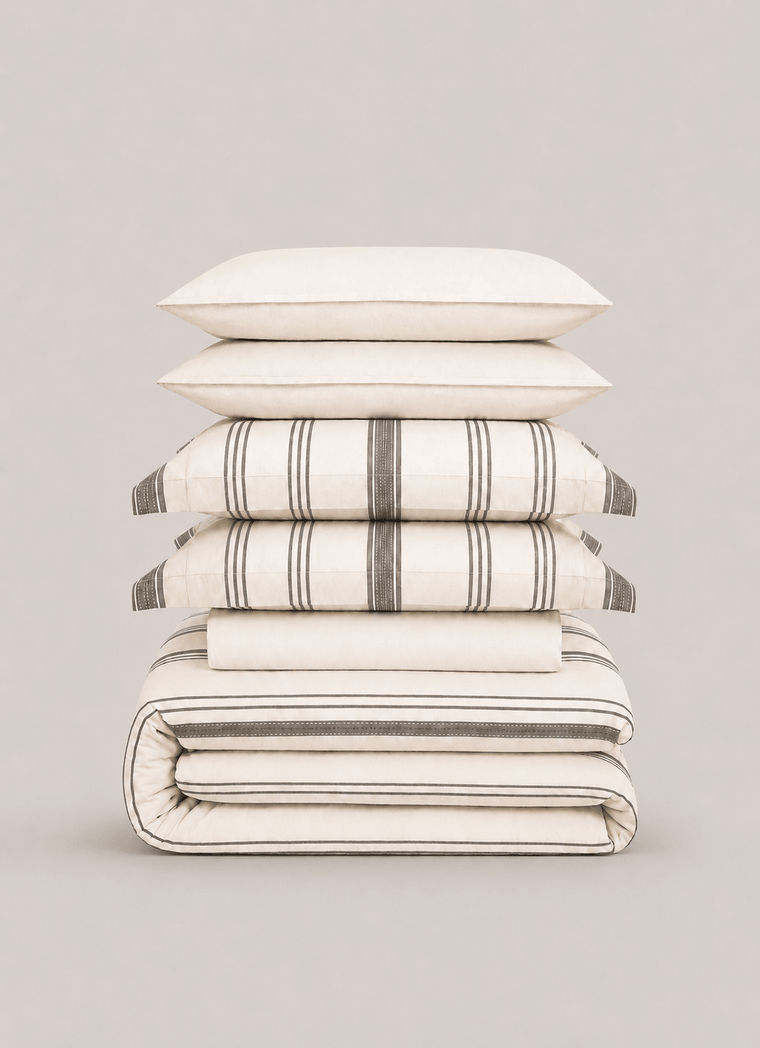
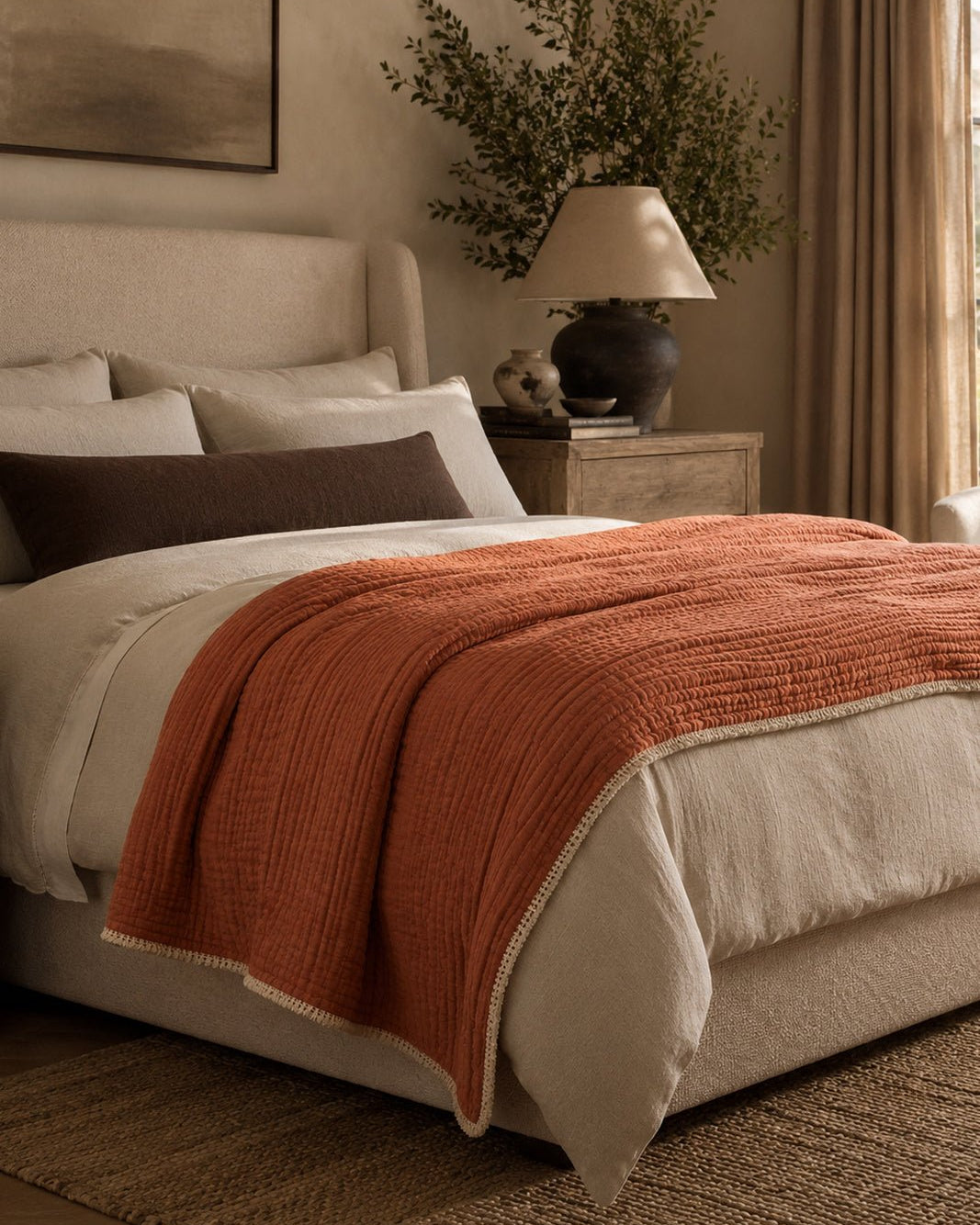
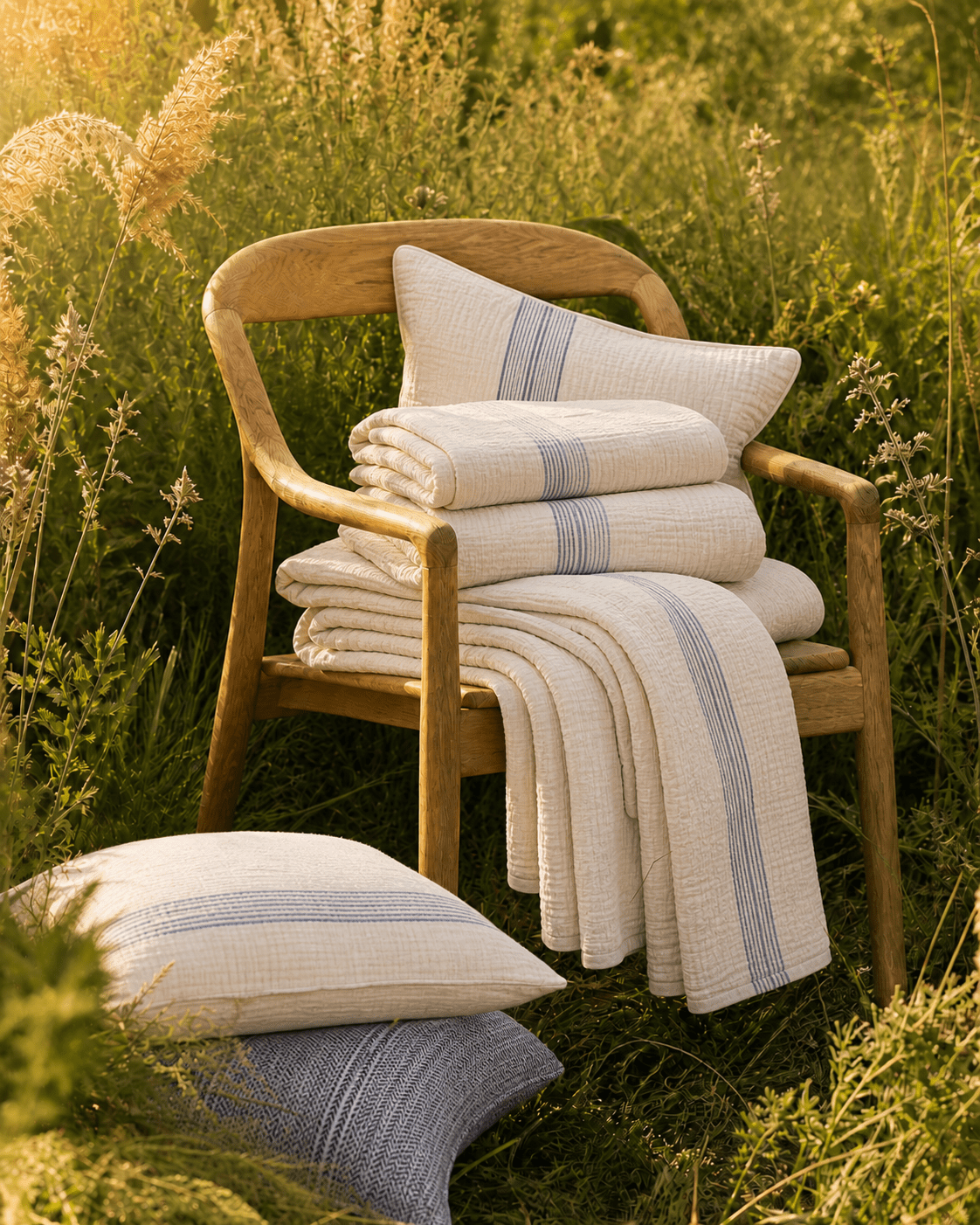
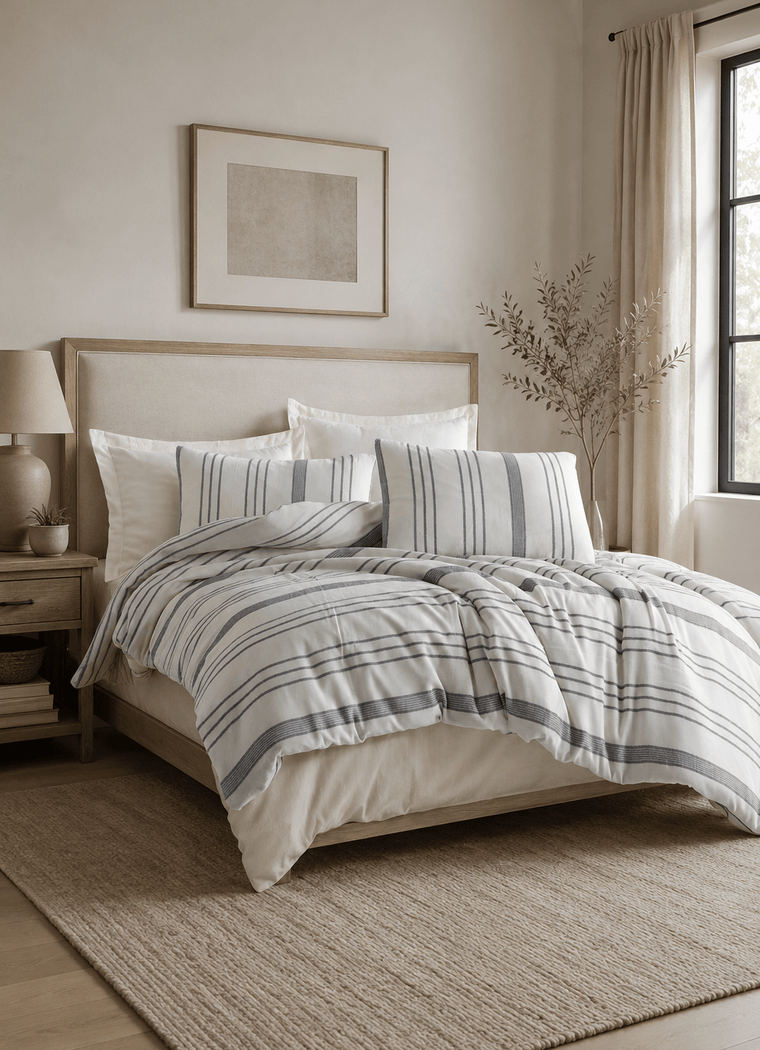
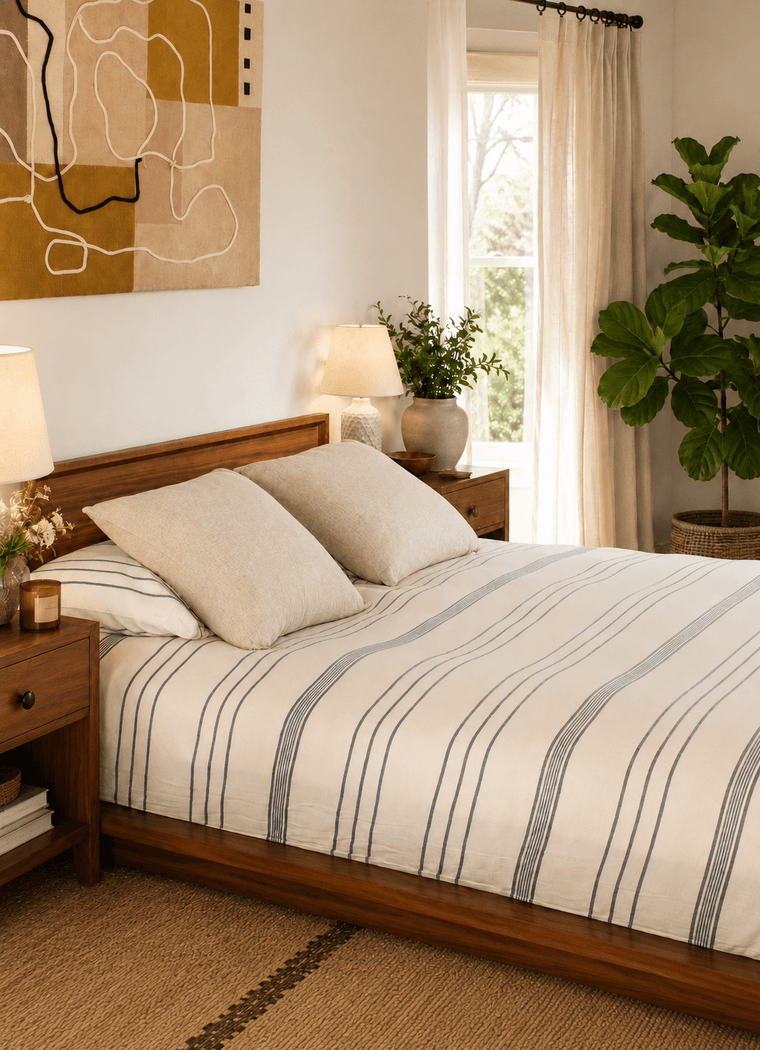
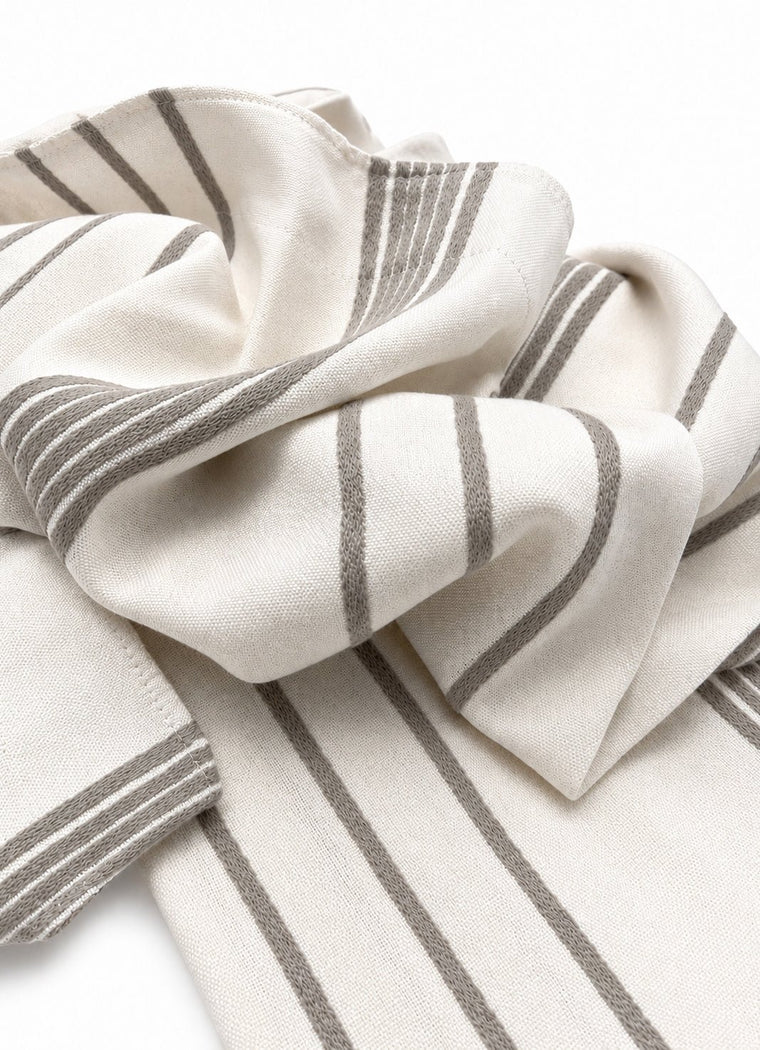
Lyocell bedding is for people who wake up hot. The fiber is plant-derived, made from wood pulp in a closed-loop process, and it behaves differently from cotton at the moment that matters: it draws moisture off skin and moves it through the cloth rather than holding it against you. Three sets sit in this collection, Queen at $319 and King at $339, produced in small batches. The hand is the other reason people buy it — lyocell sheets have a fluid, cool-to-the-touch drape closer to silk than to cotton, and they do not crease the way linen does.
How to choose
Buy lyocell if heat or night sweats wake you, or if you share a bed with someone who runs warm. It is the most actively cooling fabric we sell, because it relocates moisture instead of storing it, and damp skin is what makes a night feel unbearable.
Skip it if you love texture. This fiber is smooth and slippery by nature; if you want the crinkle of gauze or the dry, lived-in surface of linen, you will not find it here — muslin or linen will serve you better. On price: these are the most expensive sheets on the site, and the reason is the fiber itself, not a thread count. If your real complaint is that the bedroom is stuffy rather than that you personally overheat, a lighter coverlet may solve it for considerably less.
How lyocell handles heat
Cooling in bedding comes down to two things: how quickly a fabric moves moisture, and how readily it lets heat escape. Lyocell absorbs moisture into the fiber itself and then releases it to the air, so the surface next to your skin stays drier than cotton would at the same room temperature. Dry skin sheds heat efficiently; damp skin does not.
The smooth face adds to the effect by conducting warmth away on contact, which is the coolness you feel on first getting into bed. That sensation fades as the sheet warms to your body, but the moisture handling continues through the night, and that is the part that actually changes how you sleep. Because production runs in a closed loop, most of the solvent used to make the fiber is recovered and reused.
Care
Wash cool on a gentle cycle with a mild liquid detergent; powders can be abrasive against smooth fibers. Keep these sheets away from towels, since terry lint clings to the surface and is tedious to pick off. Skip softener, which flattens the drape and reduces wicking. Tumble dry low and remove promptly — most creases fall out on the bed within an hour. Avoid bleach and high heat, both of which weaken the fiber permanently. Iron on low only if you want a more formal finish, which few of these sets need.
Common questions
Is lyocell the same as Tencel?Tencel is a brand name for lyocell from one producer; lyocell is the generic fiber name. Both describe cellulose fiber made from wood pulp using a closed-loop solvent process, so the difference is labeling, not material.
Does it really sleep cooler than cotton?For most people yes, and the gap widens the more you perspire. Cotton absorbs moisture and holds onto it; this fiber moves it outward to evaporate, so the surface against you stays drier all night.
Is it slippery?It has a fluid drape and a smooth face, nearer to silk than to percale. Some people love that immediately and others find it too slick. If crisp cotton is your ideal, this is a genuinely different experience.
How does it hold up in the wash?Well, in cool water on low heat. The two real risks are a hot dryer and fabric softener. Laundered gently, the fabric keeps both its drape and its cooling behavior for years.
Compare breathability with Muslin Bedding or the dry, textured hand of Linen Bedding. Add a warm-weather top layer from Coverlets & Quilts, or see every set we make in Bedding.
Further reading
Heat is the reason most people land here, and what actually helps hot sleepers goes further into why fiber beats thread count. To weigh other options, read linen and cotton set against each other and our broader survey of bedding fibers, which places lyocell among them.