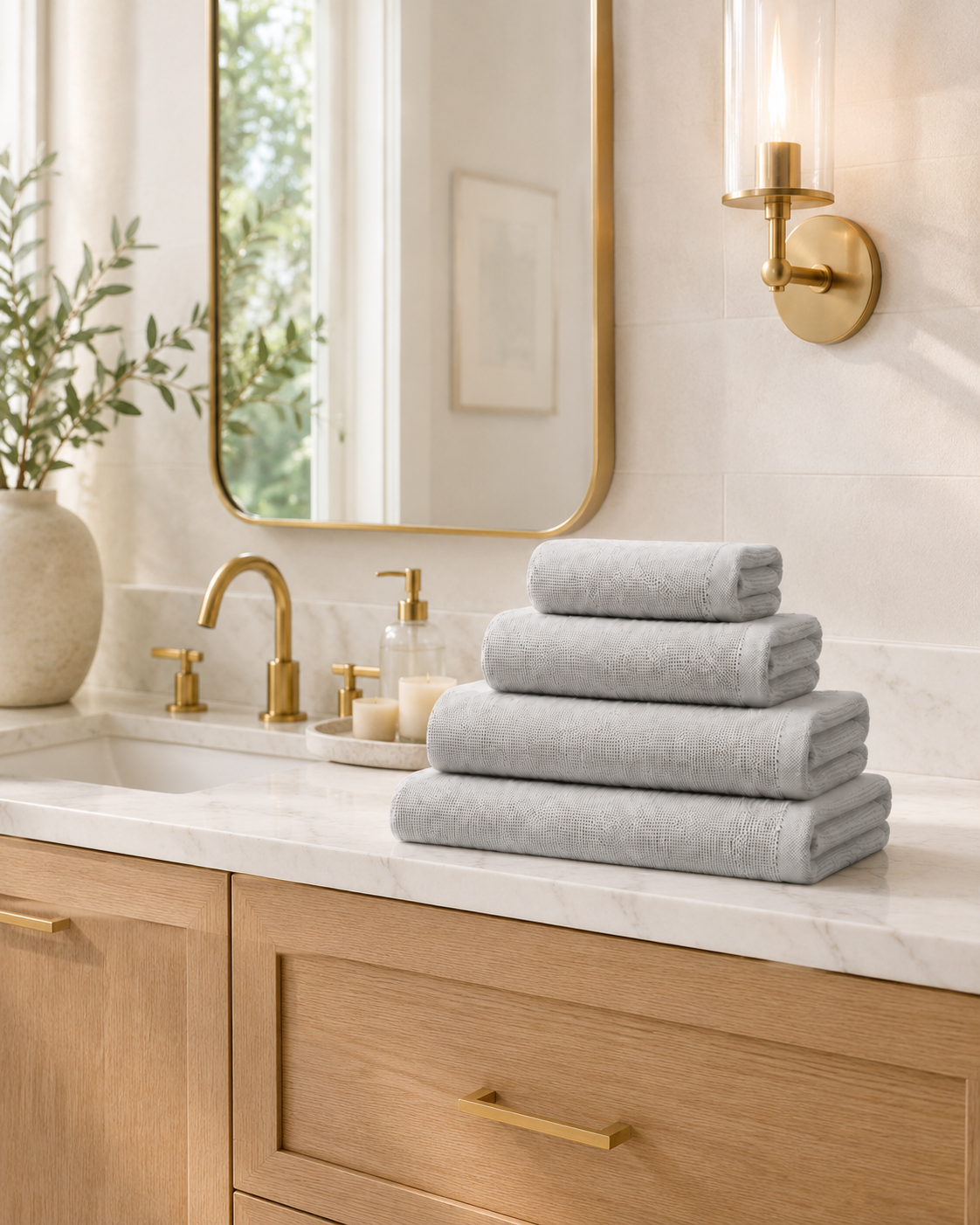
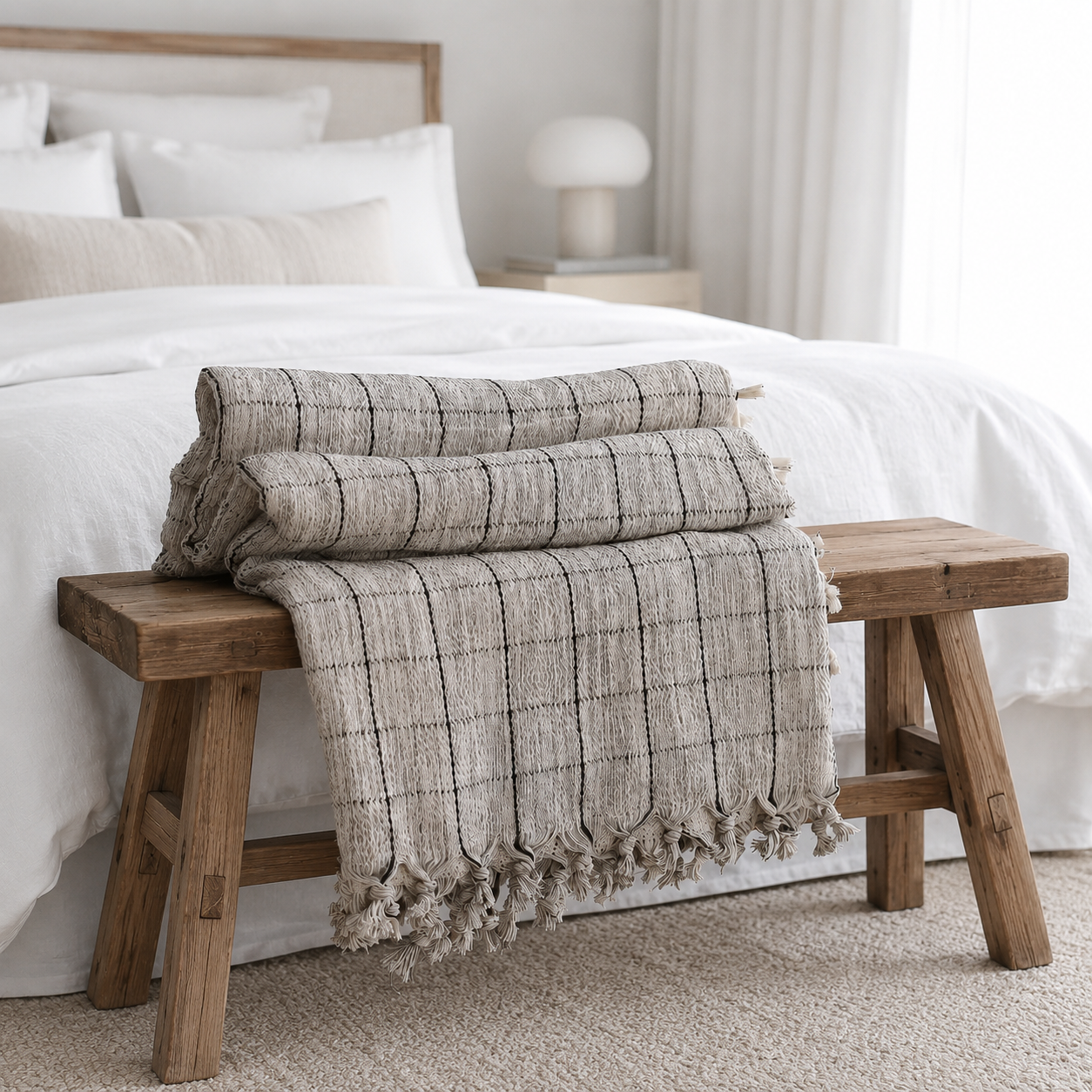
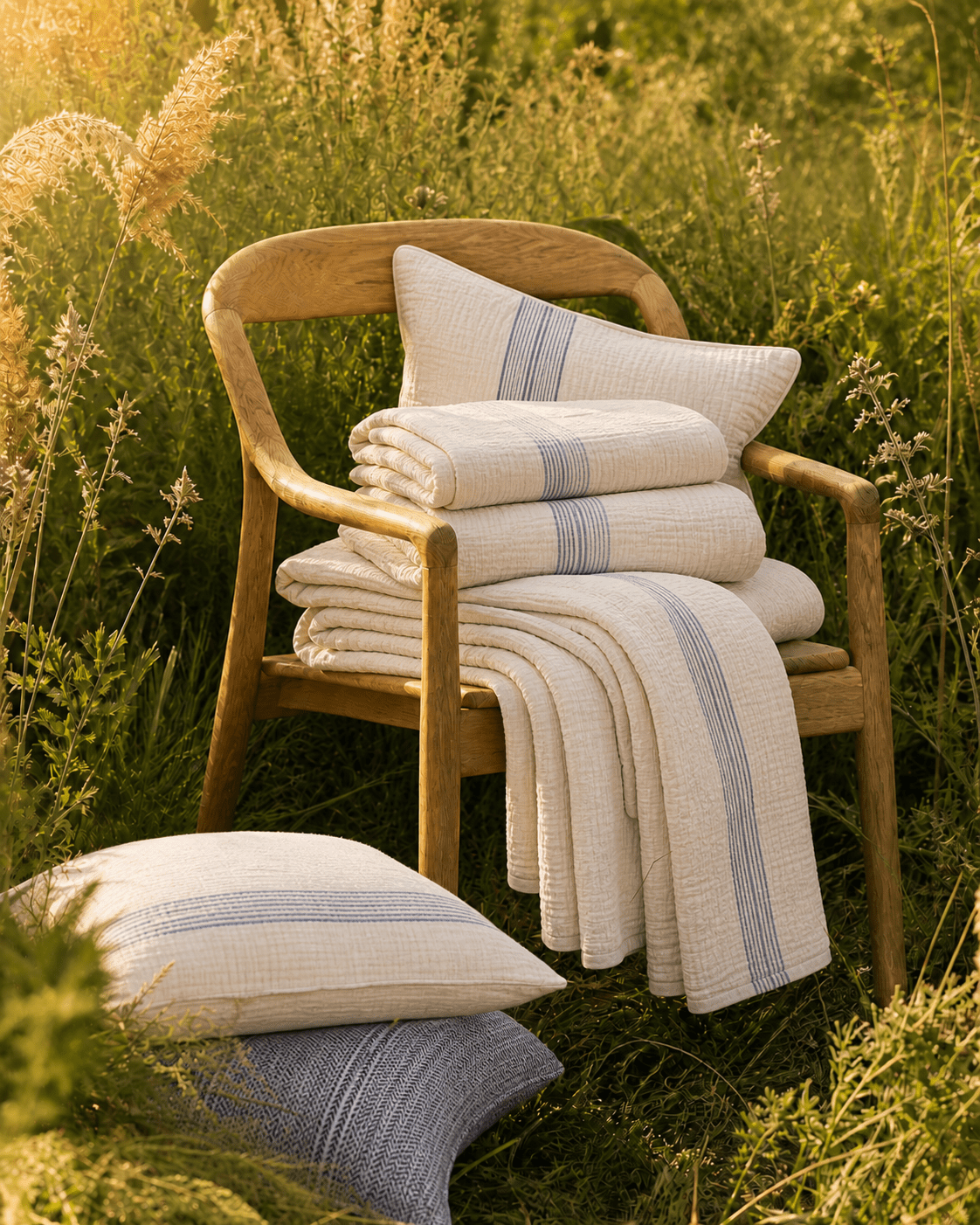
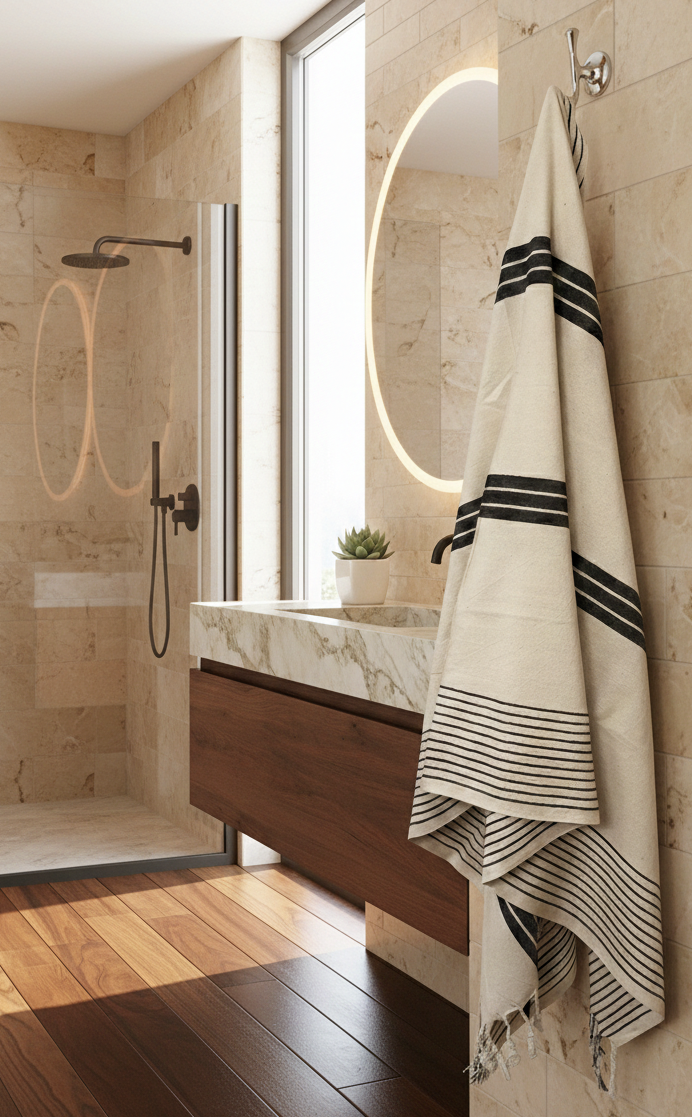
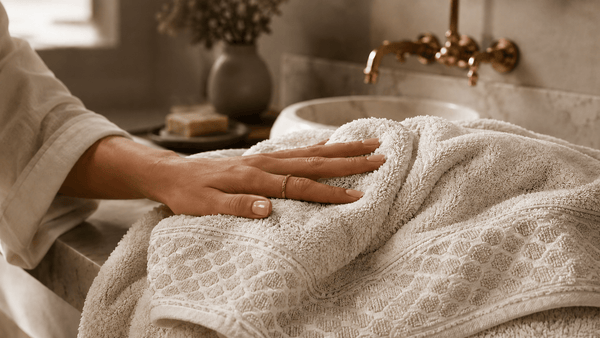
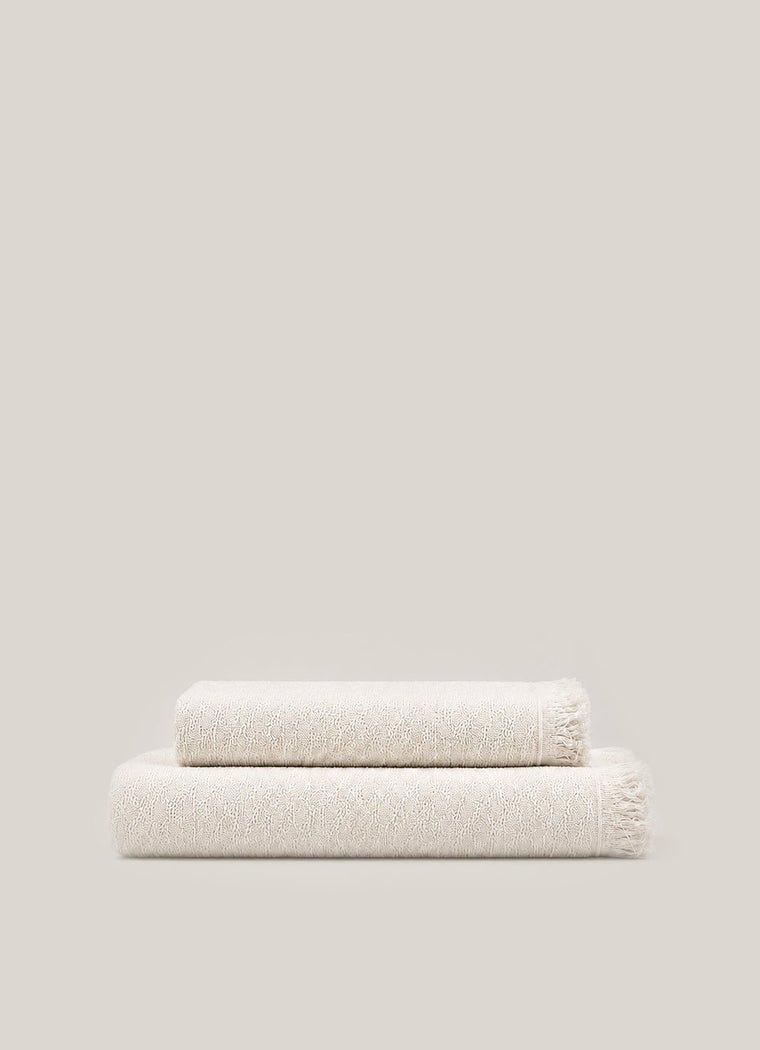
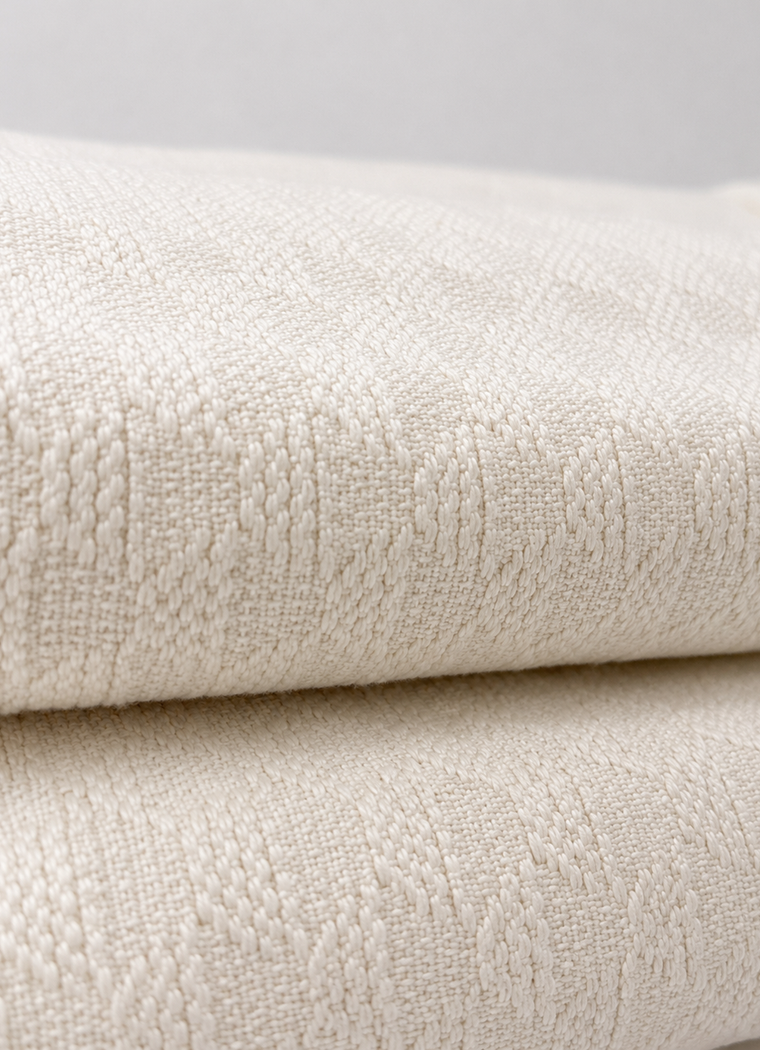
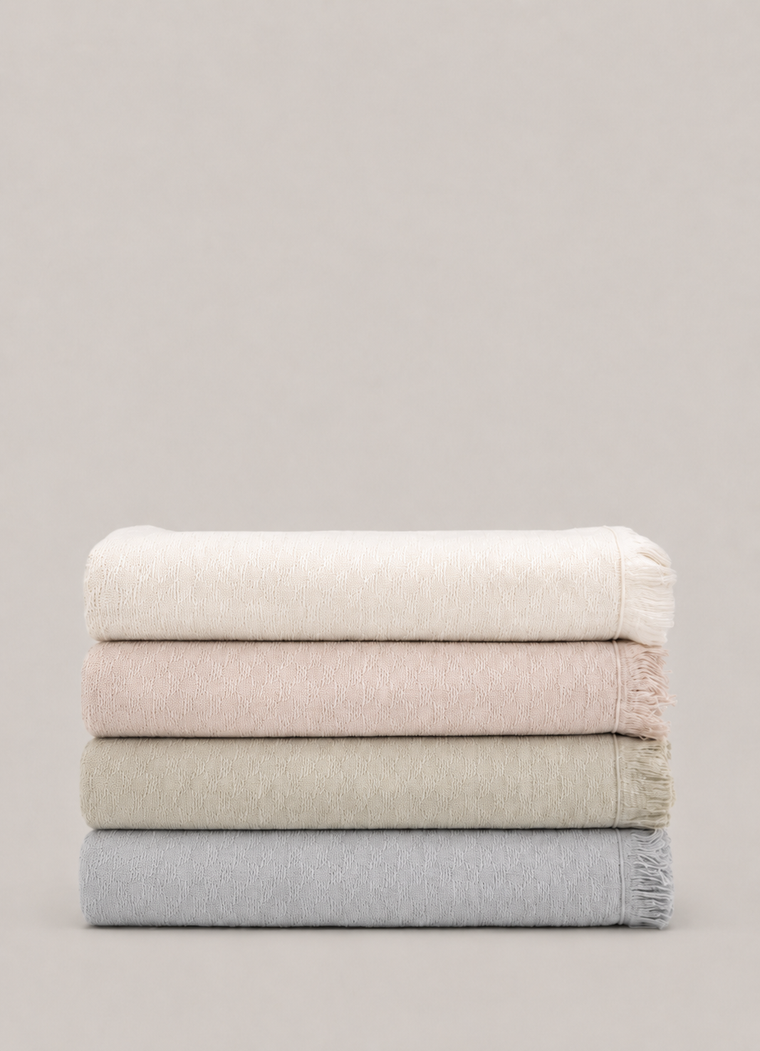
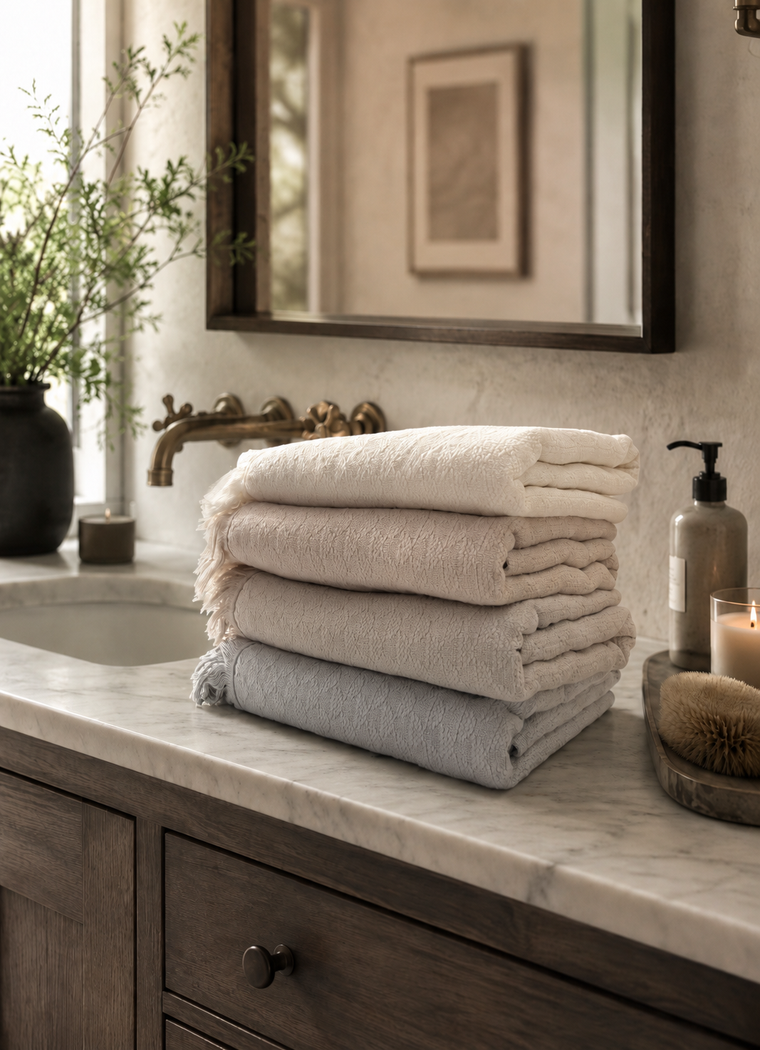
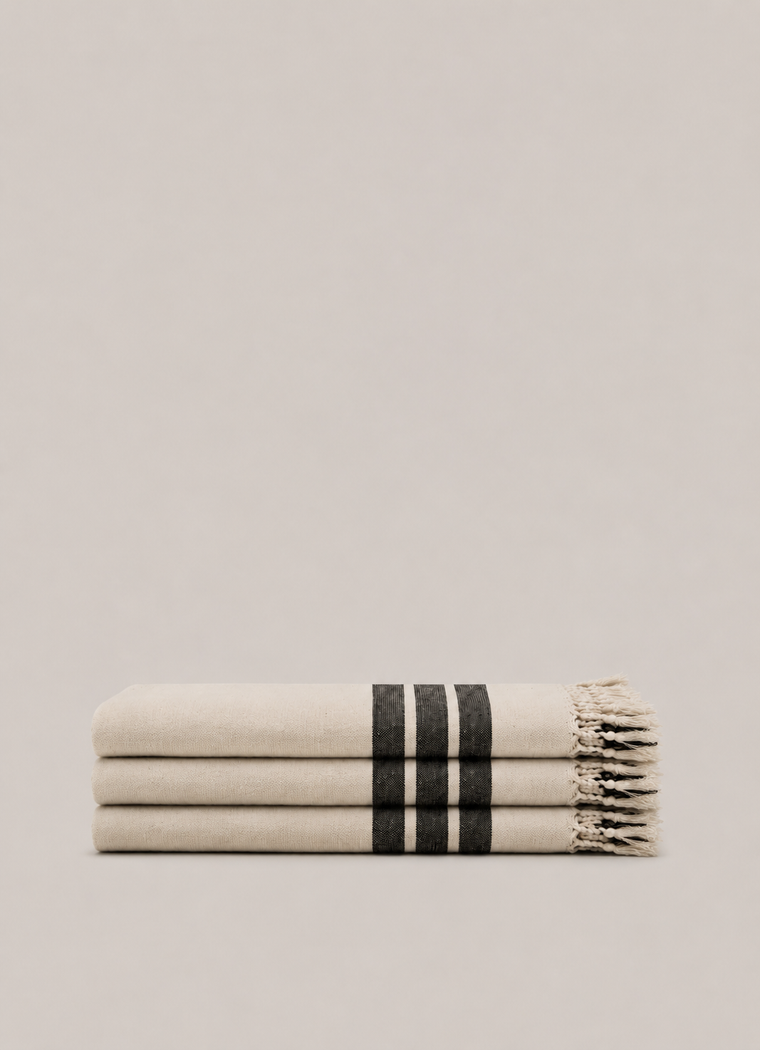
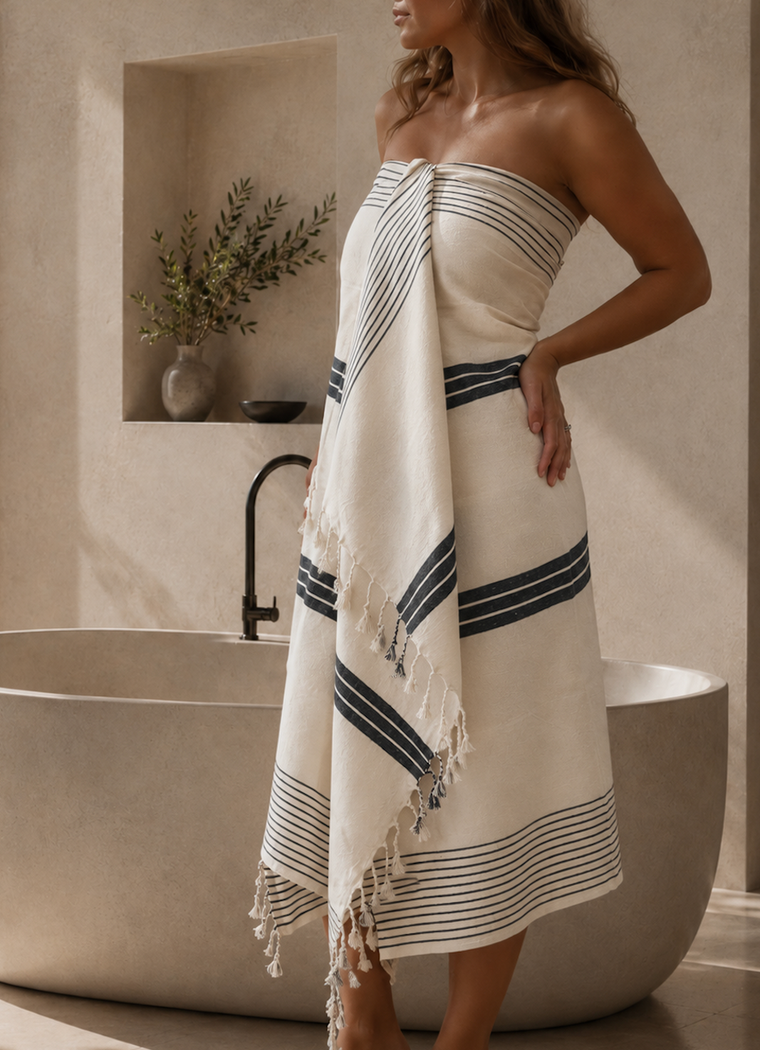
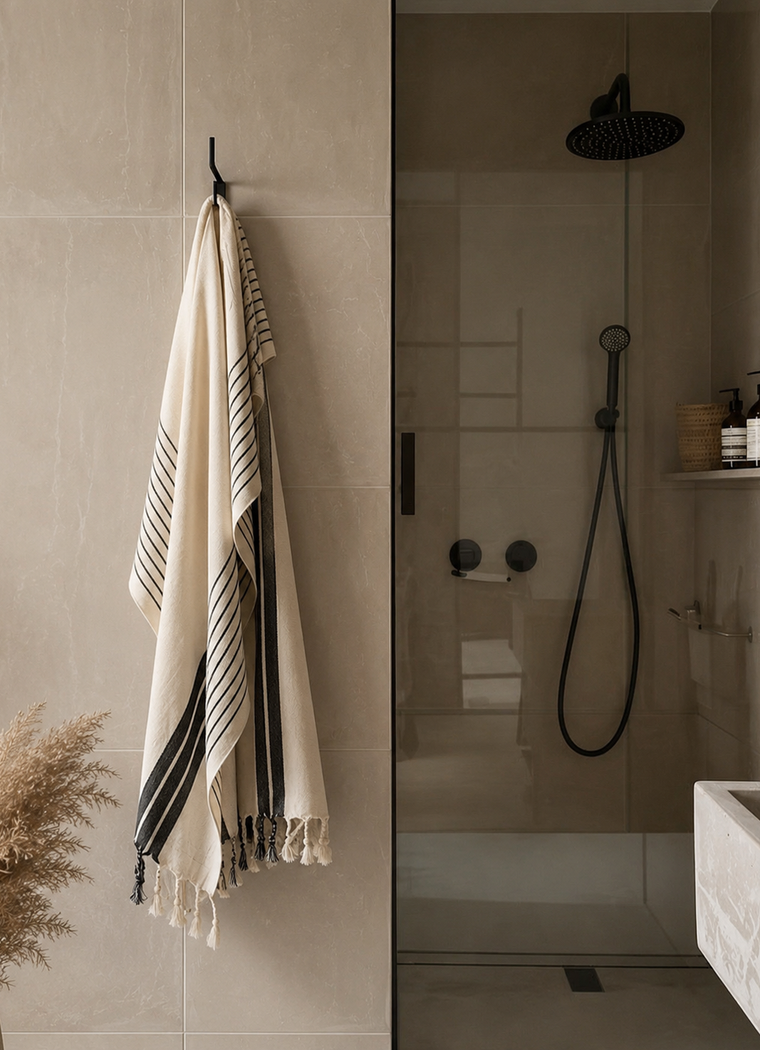
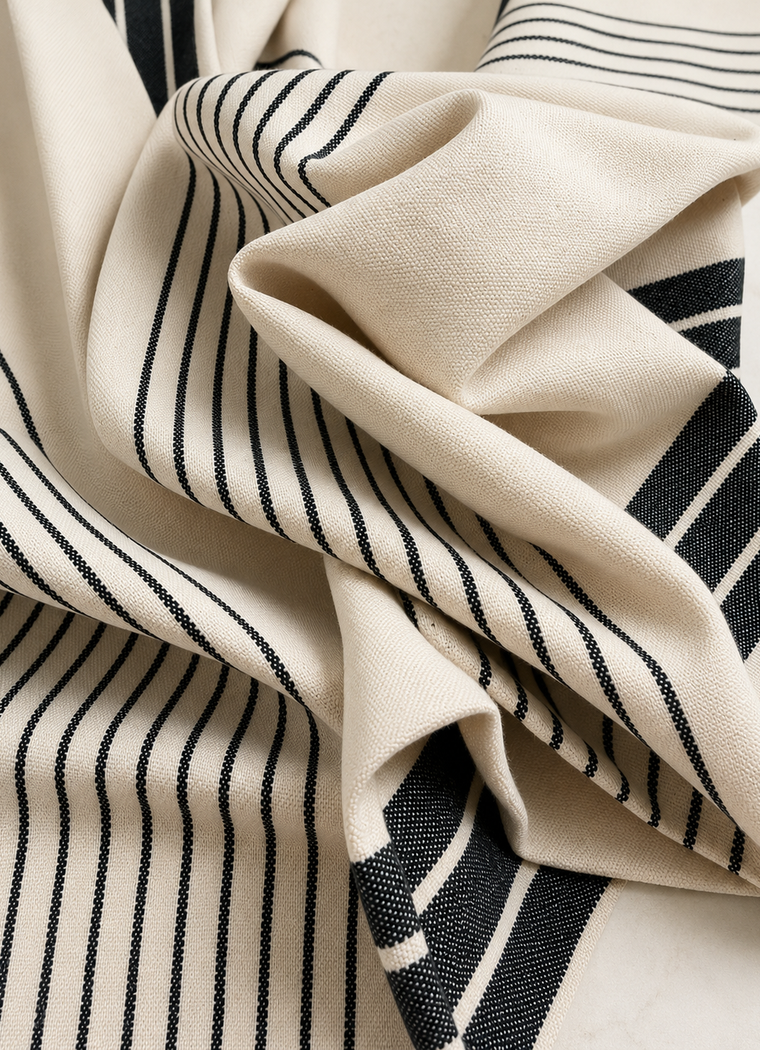
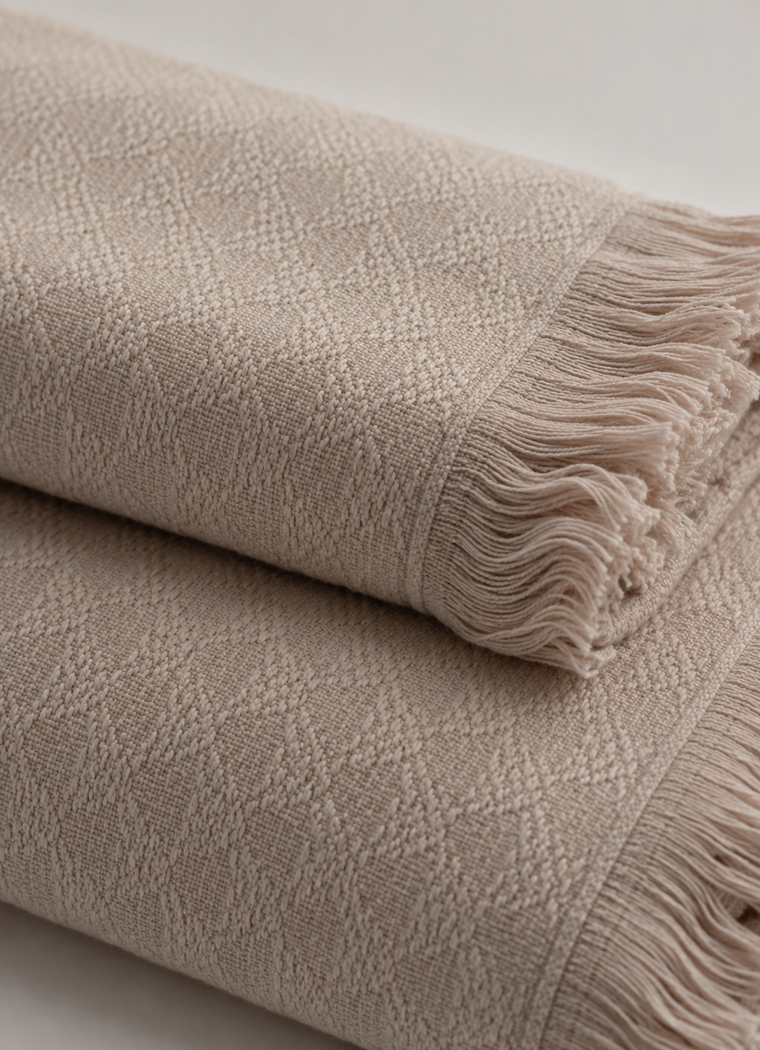
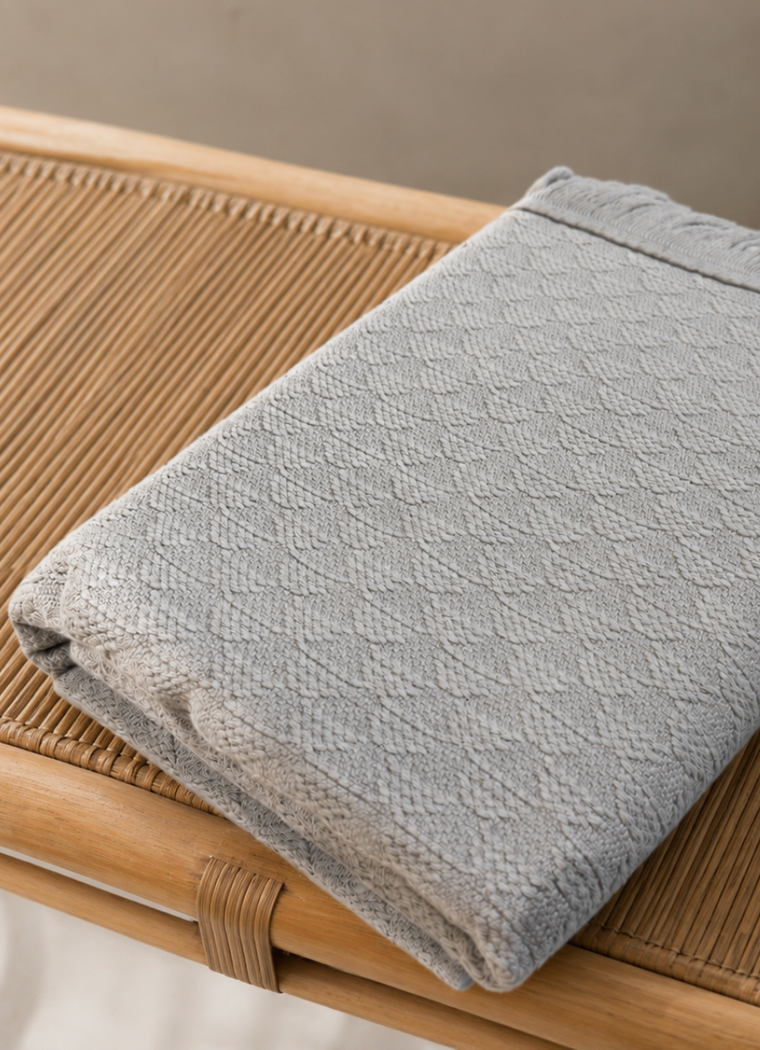
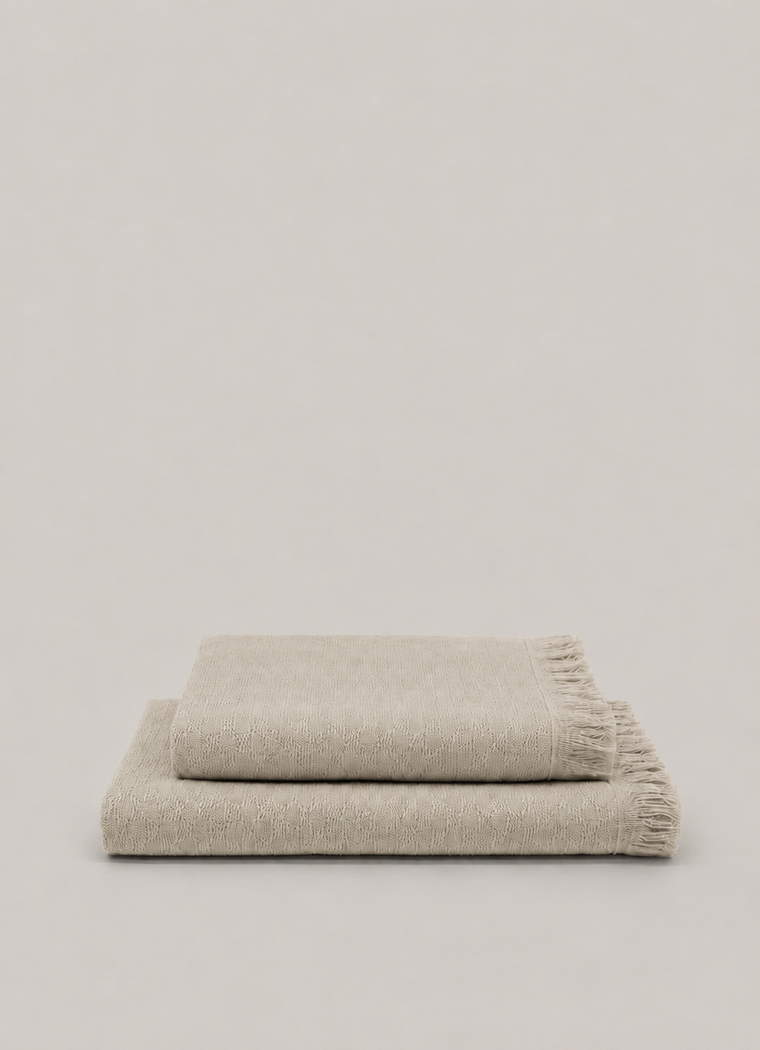
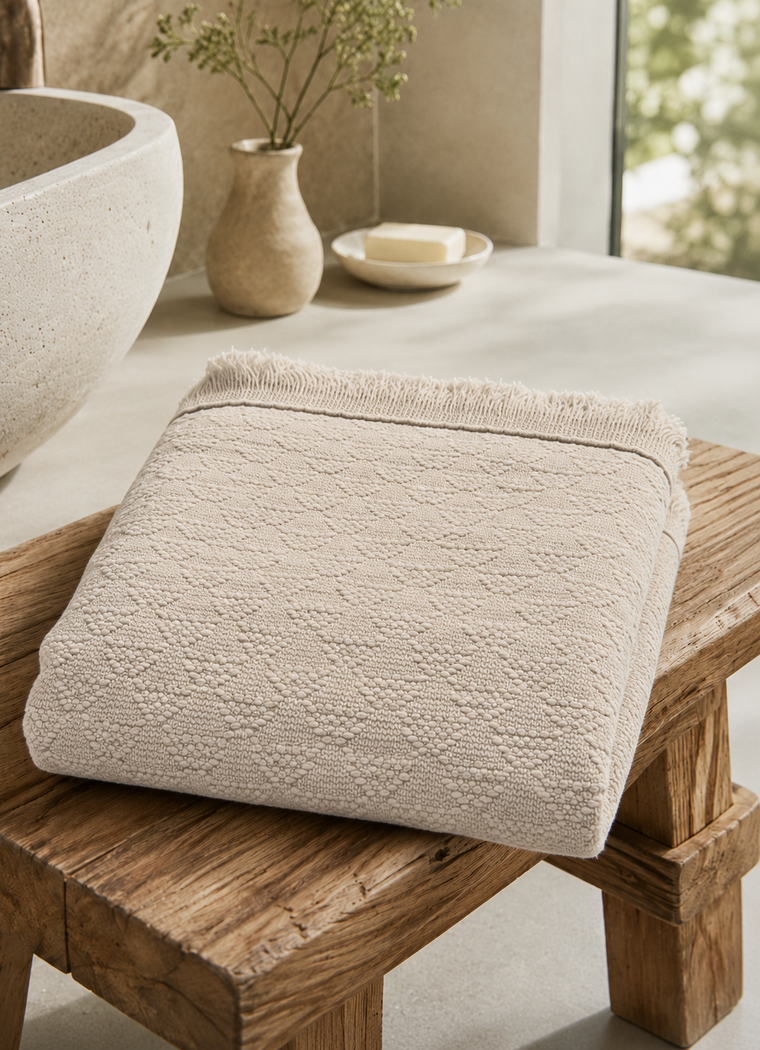
A peshtemal towel is the oldest Turkish bath textile there is: a flat-woven length of cotton with knotted fringe at both ends, made for the hammam, where cloth had to dry in humid air and be carried in and out under an arm. Ours are woven in Türkiye and kept deliberately plain — no pile, no bulk, five pieces in total, some all cotton and some cotton-linen. Folded, a Turkish peshtemal is about as thick as a sweater, which is why the people who buy one for the bathroom usually end up taking it to the beach as well.
How to choose
Buy a peshtemal if you want one textile that works in more than one place, or if your bathroom is slow to dry anything. Do not buy one expecting to be enveloped after a long soak; this cloth dries you by blotting and contact rather than by soaking through, and anyone anticipating terry is sometimes surprised on the first use.
The cotton-linen pieces have more visible texture and a drier hand, and they improve markedly with age. All-cotton pieces feel softer right away and suit a bathroom better. So: if it will spend most of its life on sand or beside a pool, choose the blend. If it is mainly a bath towel that occasionally travels, choose all cotton. For lounging, favor the longer pieces — they cover a chair and still fold into a tote.
One cloth, several jobs
The flat weave is what lets a single piece do so much. Sand has no loops to lodge in, so a shake usually clears it. Wet, a peshtemal weighs a fraction of a soaked terry towel, which matters when it goes back into a bag. Dry, it folds down small enough to live permanently in a carry-on.
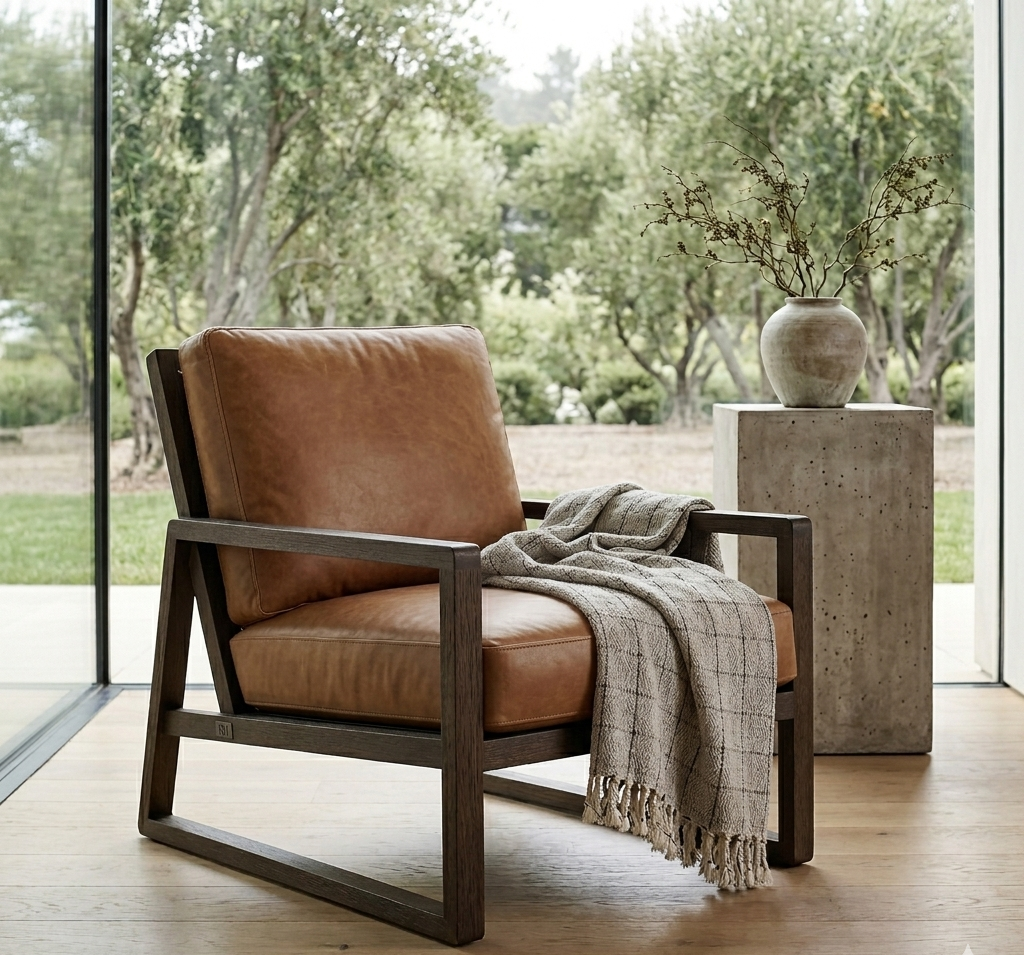
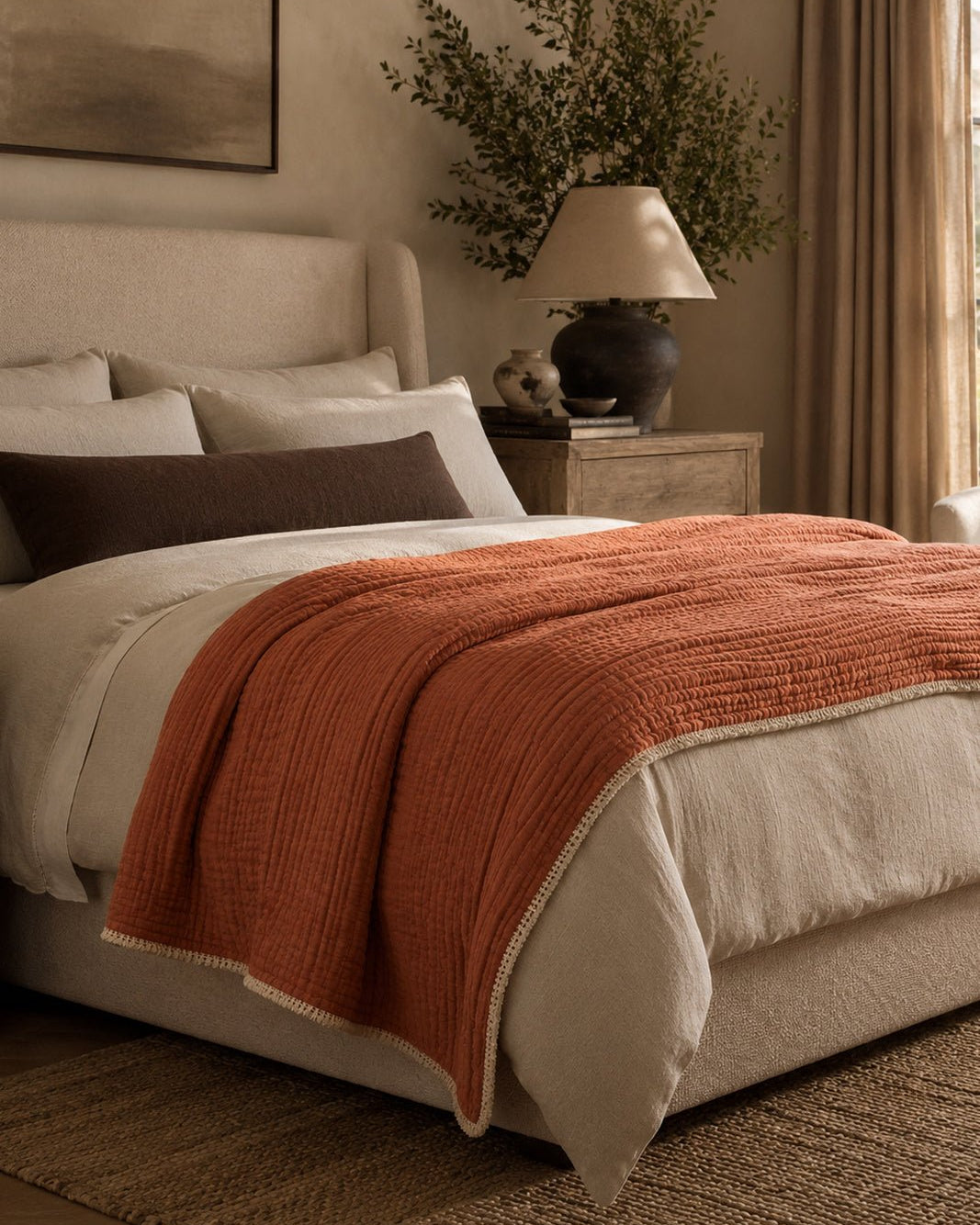
Around the house the same properties keep it useful outside the bathroom: over the arm of a chair, across the foot of a bed in July, as a picnic cloth, or as an extra layer on a plane. Guests like finding one on a hook because it never feels like using someone else's damp towel. A fair number of customers keep one in the car for no better reason than it is the thing they are always glad to have.
Care
Wash cold or warm with like colors and no softener. The first wash sets the weave, and absorbency climbs sharply afterward. Line drying suits this cloth: an hour or two outdoors, and the fringe stays straight. If you use a dryer, keep the heat low and take the towel out slightly damp. Separate the fringe with your fingers while it is still wet. Rinse salt water or chlorine out before folding a peshtemal into a bag. Skip bleach, which dulls the color and weakens the knots at either end.
Common questions
Are peshtemal towels actually absorbent?Yes, though differently from terry. Flat-woven cotton takes up roughly its own weight in water and gives it back to the air quickly. Absorbency rises noticeably across the first three or four launderings as the fibers open.
What is the difference between a peshtemal and a fouta?They are close relatives. Peshtemal is the Turkish hammam version; fouta is the North African equivalent. Ours follow the Turkish tradition, with hand-knotted fringe and a weave built for a steamy room.
Does sand stick to it?Far less than to terry, because there are no loops for grains to work into. A firm shake normally clears it. Rinse the towel at home if it has been in salt water, then let it dry fully before folding.
Is one enough as a full bath towel?For most adults, yes — a full-size piece covers and dries a body comfortably. If you also wrap long hair, add a second smaller one rather than sizing up to something unwieldy.
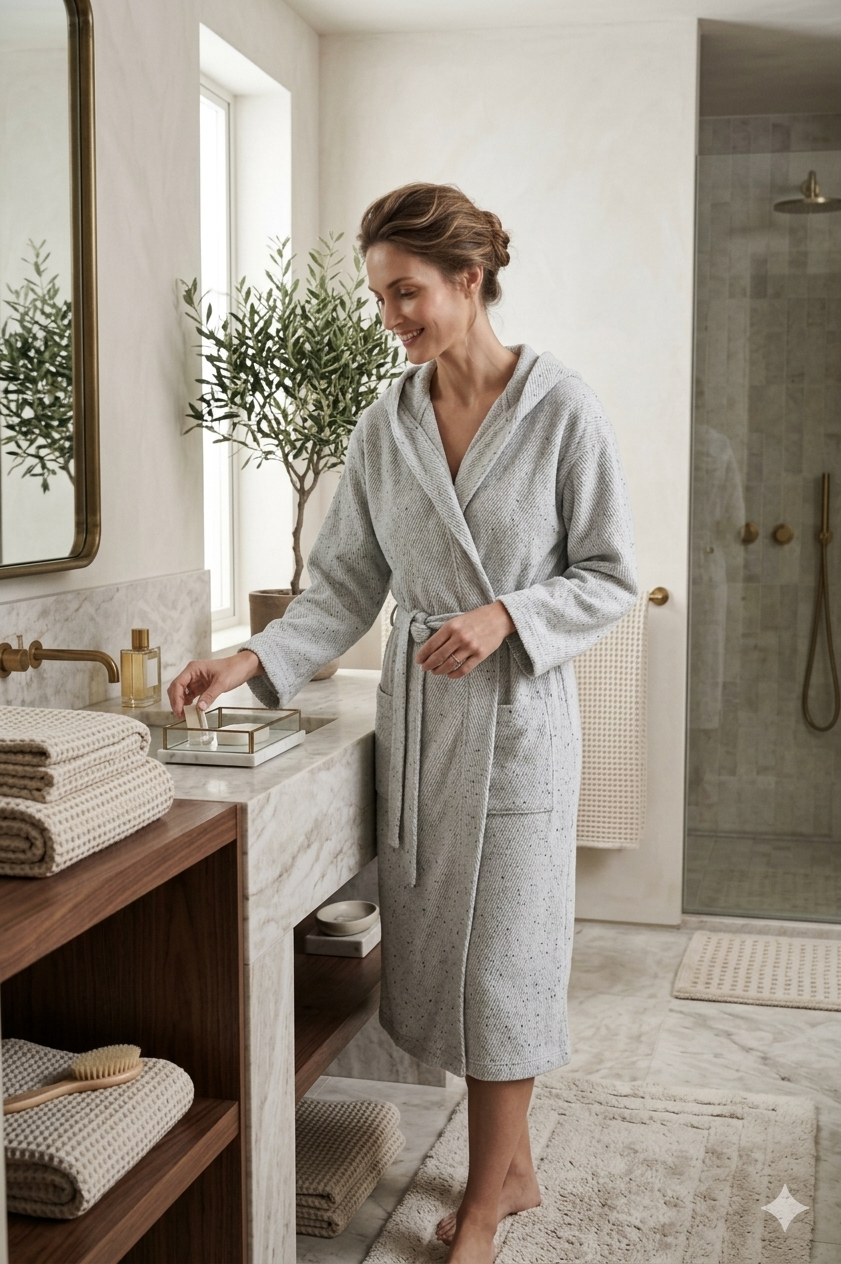
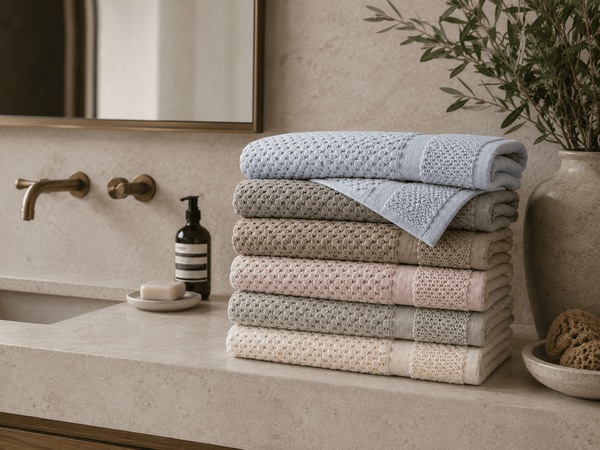
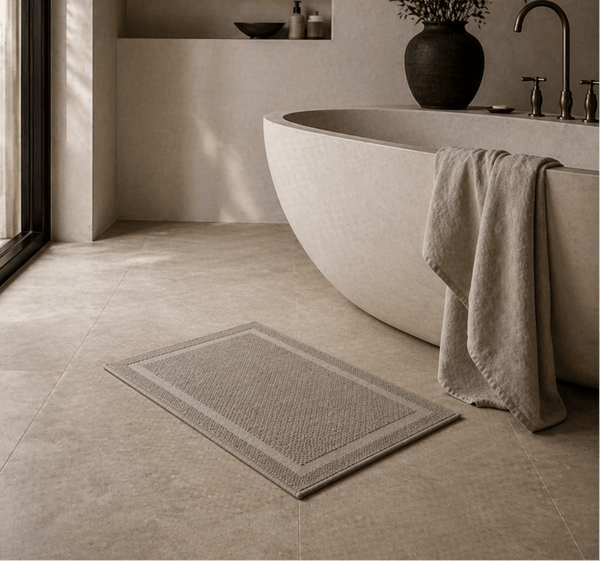
For a plusher everyday option, see the Waffle Bath Collection, or browse every weave together in Turkish cotton towels. Add a bath mat in the same spirit, or look at our throws if you like this cloth for the living room.
Further reading
Two pieces give useful context here: what to look for in a bath towel, which explains why absorbency is not a matter of thickness, and how Turkish cotton differs from commodity cotton. For the room itself, we collected styling notes for a quieter bathroom.