


Best Bedding for Hot Sleepers: The Coolest Materials Explained
If you regularly wake up too warm, your bedding is often part of the problem. The fiber, the weave, the weight and the construction of your sheets and duvet cover all decide how easily heat and moisture can leave your body overnight. A higher thread count is rarely the fix.
This guide explains which bedding materials sleep coolest, how they differ in feel, and how to choose the right one for the way you sleep.
Shop breathable bedding sets →
What is the best bedding for hot sleepers?
The best bedding for hot sleepers is made from breathable fibers in lightweight constructions that let heat and moisture move away from the body. The strongest options are:
- Lyocell for a smooth, cool-to-the-touch feel and strong moisture management
- Cotton muslin for maximum airflow and a light, relaxed texture
- Linen and linen-cotton blends for breathability, quick drying and year-round comfort
- Cotton percale for a crisp, matte, hotel-fresh feel
No single material is best for everyone. A sleeper who wants silky, fluid bedding will usually prefer lyocell; someone who wants an airy, textured bed will usually prefer muslin.
What makes bedding feel cool?
Breathability
Breathable bedding lets air circulate through the cloth instead of holding warm air against your body. Construction matters as much as fiber: an open muslin weave leaves countless small channels for air to pass through.
Moisture management
When you warm up at night, moisture makes bedding feel humid and clingy. Fibers that pull moisture off the skin and let it evaporate keep the sleep surface comfortable.
Fabric weight
A heavy fabric insulates even when the fiber itself breathes. For hot sleepers, lighter constructions let heat escape more readily.
Weave
Two cotton fabrics can feel completely different depending on how they are woven. A dense sateen, an open muslin and a crisp percale all handle air and drape differently, which is why the word “cotton” on a label tells you only part of the story.
1. Lyocell: best for a silky, cool-to-the-touch feel
Lyocell is a plant-derived fiber made from wood cellulose and spun into a smooth, round filament. That smoothness is why it feels closer to silk than to cotton, and why it registers cool the moment you get into bed. The fiber also takes up moisture quickly and releases it into the air instead of holding it against your skin.
Expect lyocell bedding to feel smooth, silky, fluid and light against the skin, with a weighty drape that falls into soft folds. It suits sleepers who dislike the dry texture of linen or the crinkle of muslin but still want breathable bedding.
Our Silken Lyocell Bedding Set is a complete six-piece set (duvet cover, fitted sheet and four pillowcases) in Sand Line, Sky Line and Ink Line.
Best for: hot sleepers who want smooth, silky, drapey bedding.
Shop Silken Lyocell Bedding →
2. Muslin cotton: best for maximum airflow
Muslin's advantage comes from the weave itself. The cotton yarns are set apart rather than packed tight, so air keeps moving through the cloth instead of collecting under the covers. It is one of the lightest-feeling bedding constructions you can sleep under.
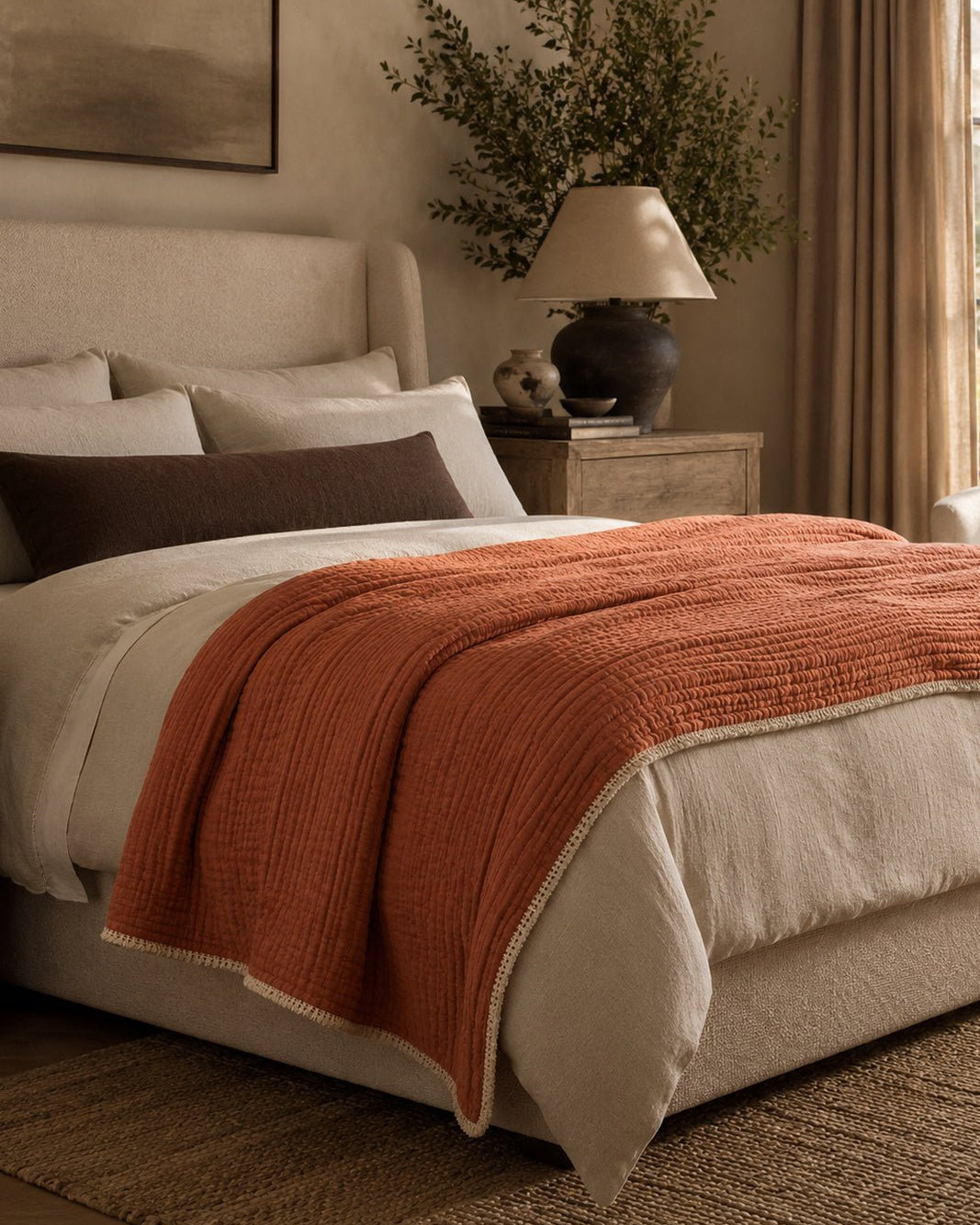
Muslin looks and feels very different from lyocell: airy, soft and lightweight, with a naturally crinkled, relaxed surface rather than a polished one. We pre-wash ours, so it arrives soft and keeps relaxing with every wash.
Our muslin bedding comes in two collections. The Textured Muslin set, in Mineral, Sea Glass and Sunlit, is 100% cotton muslin with a fine woven stripe. The Summerlight set, in Bare Ivory, Antique Blush and Sunlit, is OEKO-TEX certified Turkish cotton muslin with wooden-button closures. Both are four-piece sets: duvet cover, fitted sheet and two pillowcases.
Best for: hot sleepers who want maximum airflow and a soft, lived-in texture.
Shop Muslin Bedding →
3. Linen-cotton: best for breathable, year-round bedding
Linen has long been the warm-weather fiber: it moves air, sheds body heat and dries quickly. Pure linen, though, can feel stiff for its first season and creases deeply. A linen-cotton blend keeps linen's texture and airflow and adds cotton's softness from the first night.
Our Linen Blend Bedding Set is 40% linen and 60% long-staple Turkish cotton, sold as a six-piece set (duvet cover, fitted sheet and four pillowcases) in Dune Sand and Pale Dune. It sleeps cool in summer without feeling thin in winter.
Best for: warm sleepers who want breathable bedding with more texture and year-round versatility.
Shop Linen-Cotton Bedding →
4. Cotton percale: best for a crisp, fresh bed
If your ideal bed feels like freshly made hotel sheets, percale is worth knowing. Percale describes the weave, not the cotton: a simple one-over, one-under construction that produces a light, matte fabric with a crisp hand. Compared with the smoother, denser feel of sateen, it feels less enveloping, which is why many warm sleepers who prefer classic cotton sheets choose it.
Best for: warm sleepers who want a classic crisp-sheet feel.
Which bedding material is coolest?
“Cool” can describe different sensations, so the answer depends on which one you want.
| Material | Feel | Airflow | Best for |
|---|---|---|---|
| Lyocell | Silky, fluid, cool to the touch | High | Hot sleepers who want smooth bedding |
| Muslin cotton | Soft, airy, textured | Very high | Hot sleepers who prioritize airflow |
| Linen-cotton | Textured, relaxed, structured | High | Warm sleepers who want year-round versatility |
| Cotton percale | Crisp, matte, fresh | High | Sleepers who prefer classic cotton sheets |
Lyocell feels coolest the moment you get into bed. Linen keeps working through the night by moving moisture. Muslin wins on lightness: if your complaint is weight on the body, it is the fix. For side-by-side detail, see lyocell vs linen sheets, muslin vs linen vs cotton and linen vs cotton sheets.
Why thread count is the wrong number
A high thread count often means a denser fabric, sometimes built from thin multi-ply yarns that trap heat. For hot sleepers, breathability beats density. Look at fiber, weave and weight together rather than shopping by thread count alone.
What to avoid if you sleep hot
- Heavy sateen with very high thread counts
- Synthetic blends; polyester traps heat and moisture (see natural vs synthetic bedding)
- Thick flannel outside of winter
- Fabric softener on natural fibers; it coats the yarn and closes the weave
How to build a cooler bed
Your bedding material is the foundation, but layering matters too. Start with a breathable fitted sheet and a duvet cover in a fabric that suits your sleep temperature, then choose a duvet insert for the season: a breathable cover cannot fully make up for an overly warm insert.
In warmer months, skip piling full-bed layers. Swap the duvet for a lightweight muslin coverlet and fold the duvet at the foot of the bed, ready if the night turns cool. The bed still looks layered without trapping heat.
Which Calinea bedding is best for hot sleepers?
- For the coolest, silkiest feel: Silken Lyocell Bedding Set
- For maximum airflow: Textured Muslin or Summerlight Muslin Bedding Set
- For breathable year-round versatility: Linen Blend Bedding Set
The right choice comes down to whether you want your bed silky, airy or textured. Not sure what comes in each set? See what's included in a bedding set.
Frequently asked questions
What is the best bedding material for hot sleepers?
Lyocell, cotton muslin, linen, linen-cotton blends and cotton percale are all strong choices. The best one depends on whether you prefer silky, airy, textured or crisp bedding.
Is lyocell good for hot sleepers?
Yes. Its smooth surface feels cool on contact and the fiber moves moisture away from the skin, which is why warm sleepers often gravitate to it.
Is muslin bedding cool?
Yes. Muslin's loose, open weave lets air circulate through the fabric, making it one of the most breathable bedding constructions.
Is linen or cotton better for hot sleepers?
Both can work. Linen is known for airflow and a dry, textured feel; cotton's performance depends heavily on the weave, with muslin and percale the most relevant for warm sleepers.
What sheets are best if you sweat at night?
Look for breathable fabrics that manage moisture and don't feel heavy: lyocell, linen, muslin cotton and cotton percale are all worth considering.
Is cooling bedding only for summer?
No. People who naturally sleep warm often prefer breathable bedding all year and adjust for the season with the duvet insert and extra layers instead.
Does thread count determine how cool sheets are?
Not by itself. Fiber, yarn, weave and weight all matter, and a very high thread count can mean a denser, warmer fabric.
The bottom line
For hot sleepers, bedding should do more than feel soft: it should let air circulate, manage moisture and avoid unnecessary weight. Lyocell gives the coolest, silkiest touch; muslin gives the most airflow; linen-cotton gives breathability with texture across the seasons; and percale remains the classic choice for a crisp bed.
Sleep cooler: Shop breathable bedding sets · Complete bedding sets


