
How to Layer Your Bed for Winter, Naturally
When the nights turn cold, the instinct is to add weight: a heavier comforter, another blanket, a thicker sheet. Yet many people sleep worse for it, waking at 3 a.m. too warm in a heated bedroom and pushing everything onto the floor.
A warmer bed is not necessarily a heavier one. The most comfortable winter beds are built from several breathable layers that can be added or taken away, so the bed adjusts to the night rather than the other way around.
In this guide
The Short Answer
Warmth in bedding comes from still air trapped between layers, not from weight alone. Several breathable natural-fiber layers keep you warmer and drier than one heavy synthetic comforter, because they hold air while letting moisture escape, and because you can take one off when the room warms up.
Why Layers Beat One Heavy Comforter
Insulation is mostly trapped air. Each layer on a bed holds a thin pocket of still air above your body, and several thin pockets insulate efficiently while staying easy to adjust.
The second reason is moisture. The body releases moisture all night, in winter too. Cotton and linen absorb it and let it move away from the skin. A dense synthetic comforter tends to hold it close, which is why people overheat, throw the covers off and then wake up cold. Our guide to natural vs. synthetic bedding explains the difference in detail.
Sleep researchers commonly recommend a cool bedroom, roughly 60 to 67°F (about 16 to 19°C). Layered bedding lets you keep the room cool and the bed comfortable.
How to Layer a Bed for Winter
1. Start with breathable sheets
Your base layer should breathe, even in winter. Cotton muslin and linen-cotton blends both work all year. Muslin is soft and pliable from the first night; a linen-cotton blend has a drier, more structured hand and handles moisture especially well. Neither needs to be swapped out when the season changes. Only what goes on top does.
One note on lyocell: it feels cool to the touch, which is a gift for anyone who sleeps hot in a heated bedroom, and less so for anyone who runs cold.
2. Choose a winter-weight duvet insert
The insert inside your duvet cover provides most of the bed's warmth. A down, feather or wool insert in a winter or all-season weight is the usual choice. Our bedding sets include the duvet cover, so you can pair it with whichever insert suits your bedroom.
3. Add a coverlet for adjustable warmth
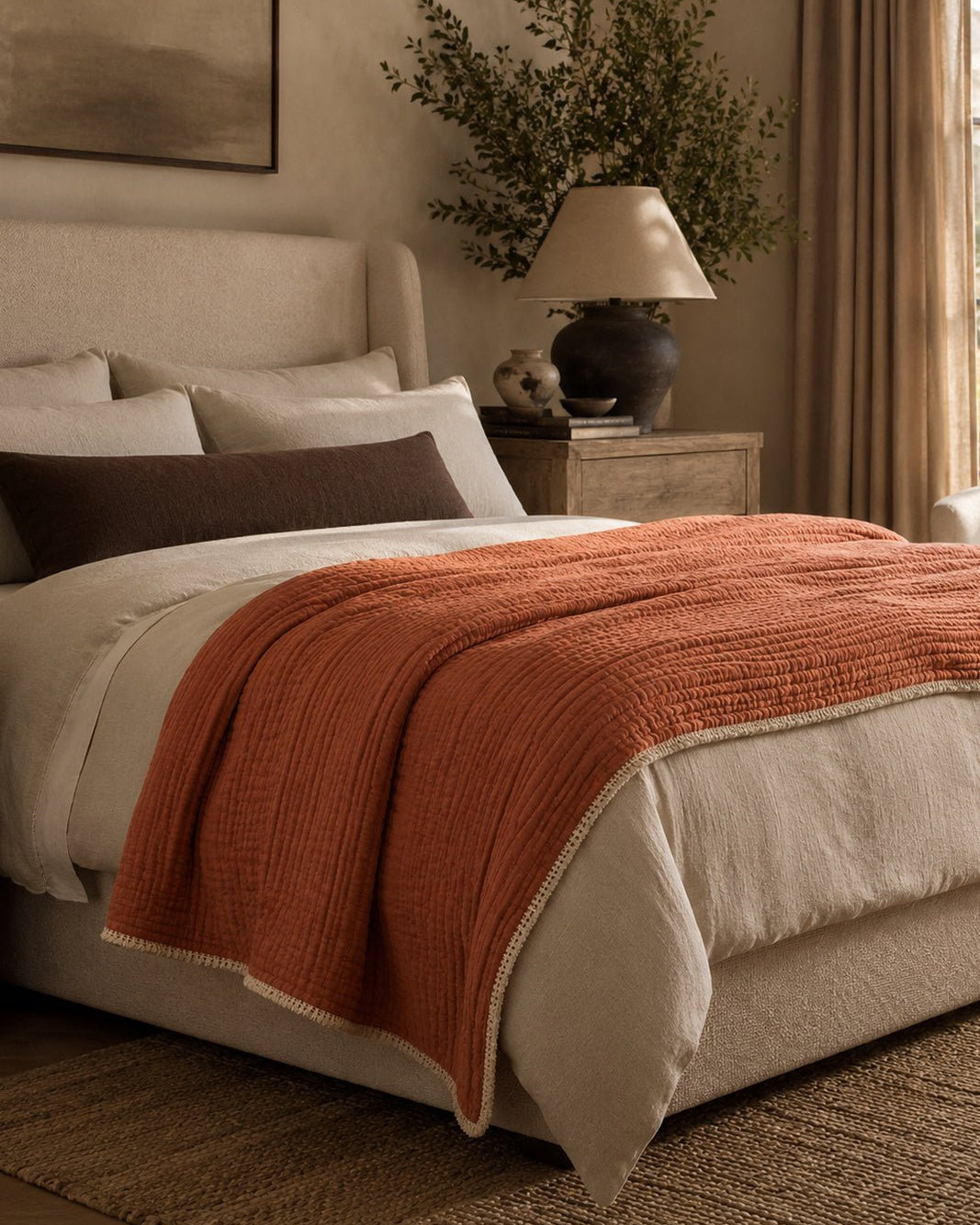
The coverlet is the most useful winter layer, because it can cover the whole bed on the coldest nights and fold to the foot on milder ones.
- LoftWeave Quilted Muslin Coverlet, $219. Four layers of soft Turkish cotton muslin, quilted lightly so they behave as one cloth. The still air held between the layers is where the warmth comes from, while air still passes through, so it does not overheat. Queen, 86 × 94 in.
- Heritage Coverlet, $189. Handwoven cotton with enough drape to fall around a mattress rather than sit on top of it. 78 × 94 in.
- Aurea Muslin Coverlet, $189. Our lightest coverlet, for those who run warm but still want a second layer.

4. Keep a throw at the foot
A throw folded at the foot of the bed is the layer you pull up at 4 a.m. and push away at 6. The handwoven Heritage Throw is 63 × 86 in, large enough to cover one sleeper, and spends the day on the sofa once winter is over.
5. Split the bed if you sleep differently
If one of you runs hot and the other cold, layer by side. Fold the coverlet in half lengthwise over the colder sleeper's side, or give each person their own throw.

A Layering Guide by Room Temperature
| Bedroom at night | Suggested layers |
|---|---|
| Below 62°F (17°C) | Sheets, a winter-weight duvet, a coverlet over the whole bed and a throw at the foot |
| 62 to 66°F (17 to 19°C) | Sheets and duvet, with a coverlet folded at the foot to pull up when needed |
| 67 to 70°F (19 to 21°C) | Sheets and duvet; keep the coverlet on a bench or the end of the bed |
| Above 70°F (21°C) | Sheets, with a coverlet or throw in place of the duvet |
Treat this as a starting point. Hot sleepers can drop a layer from each row; cold sleepers can add one.
Do You Need Different Bedding for Winter?
Usually not. Good natural-fiber sheets and duvet covers work year-round; what changes with the season is the number of layers on top. That is the advantage of a layered bed: one set of sheets, plus a coverlet and a throw, covers every month of the year. Our guides to coverlets and throws explain how to use each, and how to make your bed like a boutique hotel shows how to style the layers.
Winter Care
- Wash sheets and duvet covers weekly.
- Wash coverlets and throws less often, every few weeks or as needed, cold on a gentle cycle, then tumble dry low.
- Make sure everything is completely dry before it goes back on the bed. Damp bedding always feels cold.
- Pull the covers back for a few minutes each morning to let the bed air.
Our natural bedding care guide has the full routine.
Frequently Asked Questions
What bedding is warmest for winter?
A layered bed: breathable cotton or linen sheets, a winter-weight duvet insert, a coverlet and a throw. Several layers trap more still air than a single heavy comforter and can be adjusted through the night.
Is cotton bedding warm enough for winter?
Yes. Cotton sheets are comfortable year-round. In winter, the warmth comes from what you layer on top: the duvet insert, a coverlet and a throw.
Is linen good for winter?
Yes. Linen regulates temperature rather than simply cooling, and it manages moisture especially well, which helps you stay dry and comfortable under heavier layers.
What is a coverlet used for in winter?
It adds a second layer of warmth over the duvet on cold nights and folds to the foot of the bed on milder ones, so you can adjust without getting up.
How many layers should be on a bed in winter?
Most bedrooms are comfortable with three or four: sheets, a duvet, a coverlet and, on the coldest nights, a throw at the foot.
Why do I overheat under a heavy comforter?
Heavy, dense comforters, especially synthetic ones, trap heat and moisture close to the body. Lighter breathable layers let both escape while still holding warm air.
The Bottom Line
The warmest winter bed is not the heaviest one. Breathable sheets, a good insert, a coverlet and a throw give you warmth you can adjust night by night, and the same bed carries you through every season.
Shop coverlets · Throws · Bedding sets
Refined living, naturally.