
Turkish Cotton Bedding: What Makes It Different?
Turkish cotton has long been associated with exceptionally soft towels, but its qualities extend well beyond the bath. When thoughtfully woven into sheets, duvet covers, coverlets and other bedding, Turkish cotton can offer a distinctive combination of softness, breathability, durability and natural comfort.
So, what makes Turkish cotton bedding different from ordinary cotton bedding?
The difference begins with the cotton itself. Turkish cotton is traditionally grown in Türkiye, including regions surrounding the Aegean, where cotton cultivation has a long history. It is valued for fibers that can be spun into smooth, strong yarns and woven into fabrics that become increasingly supple with use.
For bedding, that translates into something particularly desirable: fabric that feels refined against the skin without sacrificing breathability or longevity.
For those interested in experiencing these qualities firsthand, Calinea's Turkish cotton bedding collection explores the material across different weaves, textures and natural-fiber blends.
In this guide
- What Turkish cotton bedding is
- What makes Turkish cotton different
- Is it good for hot sleepers?
- Turkish cotton vs. regular cotton
- Turkish cotton vs. Egyptian cotton
- Turkish cotton vs. linen
- Does thread count matter?
- What to look for when buying
- How to care for Turkish cotton bedding
- Frequently asked questions
What Is Turkish Cotton Bedding?
Turkish cotton bedding is bedding made using cotton grown in Türkiye and woven into textiles such as sheets, duvet covers, coverlets, blankets and pillowcases. Depending on the construction, Turkish cotton bedding can feel crisp and smooth, soft and relaxed, airy and gauzy, or substantial and textured.

The term describes the origin of the cotton rather than a single type of fabric. Turkish cotton may be woven into:
- Percale or other smooth sheet fabrics
- Muslin and gauze
- Waffle weaves
- Jacquard fabrics
- Textured coverlets
- Lightweight blankets and throws
- Duvet covers and shams
This versatility is one reason Turkish cotton works so well throughout the bedroom.
What Makes Turkish Cotton Different?
Not all cotton feels the same.
Cotton quality is influenced by several factors, including fiber length, fineness, strength, harvesting, spinning and the way the final fabric is woven and finished.
High-quality Turkish cotton is prized because it can produce yarns that are both strong and relatively smooth. Longer fibers generally require fewer joins when they are spun into yarn, helping create a more even textile surface. (Our guide to what Turkish cotton is looks at the fiber itself in more detail.)
For the sleeper, the result can be bedding that feels soft and refined while remaining durable enough for everyday use.
1. It Can Be Exceptionally Soft
One of the most noticeable qualities of well-made Turkish cotton bedding is its hand feel.
Rather than relying solely on heavy chemical softening treatments to create an immediately slick surface, quality cotton textiles can develop greater softness naturally through washing and use.
This is especially apparent in relaxed bedding constructions such as muslin, gauze and washed cotton.
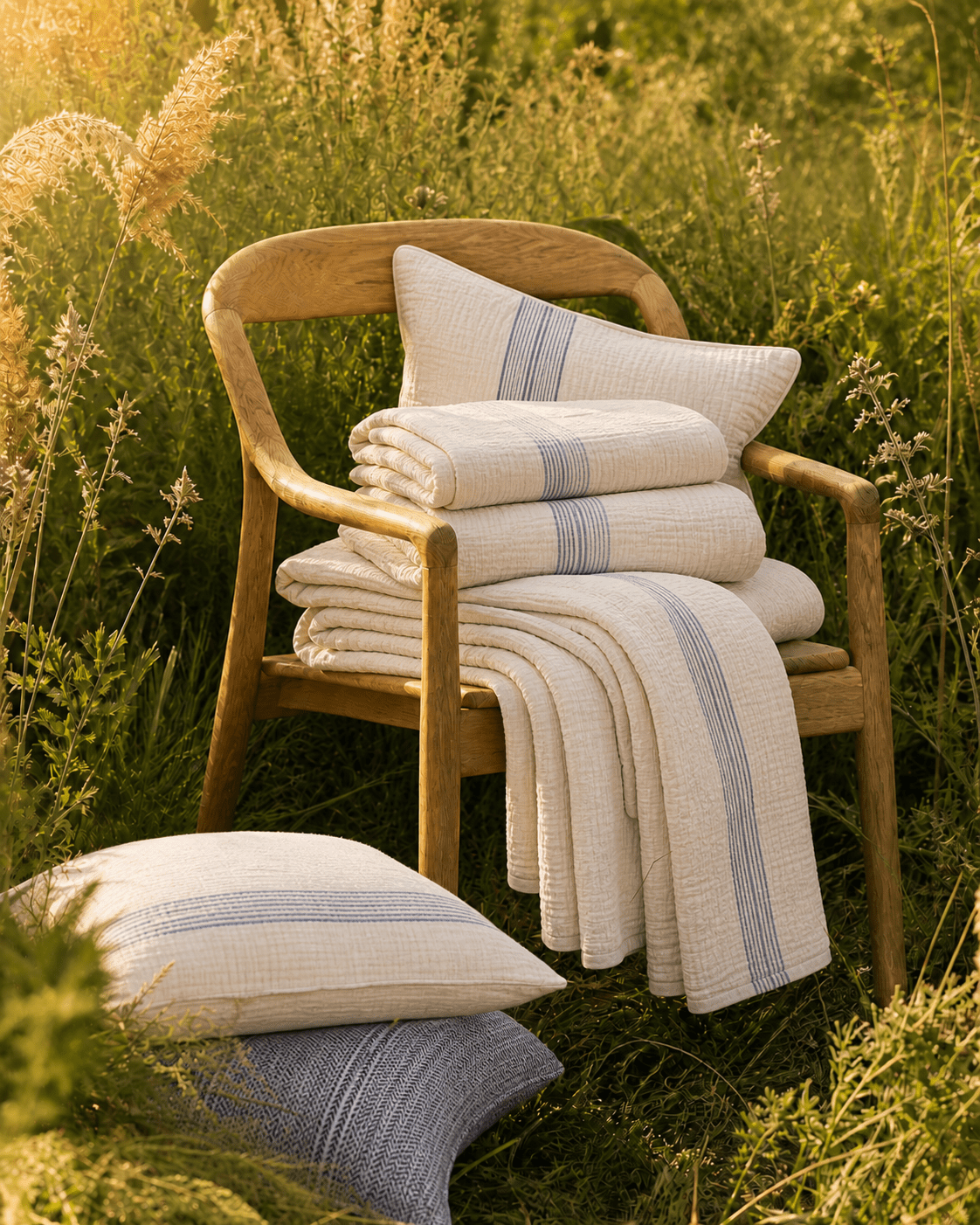
Calinea's Muslin Bedding Collection demonstrates this particularly well. Made around airy cotton-gauze constructions, muslin creates a naturally relaxed surface that feels soft without appearing overly polished.

The result is a softness that feels comfortable rather than artificial.
For people who prefer bedding with a natural, lived-in luxury, Turkish cotton is particularly appealing.
2. Turkish Cotton Is Naturally Breathable
Cotton is a naturally breathable fiber, making it well suited to bedding.
Unlike bedding made predominantly from synthetic fibers, cotton allows air and moisture to move through the textile more readily. The precise level of breathability depends on the yarn, weave, weight and construction of the fabric.
Lightweight Turkish cotton weaves can therefore be especially comfortable for people who prefer airy bedding or tend to sleep warm.
A loosely woven Turkish cotton muslin coverlet, for example, will generally feel considerably more breathable than a dense, heavily constructed blanket.
This makes Turkish cotton particularly versatile for layering.
During warmer months, a lightweight cotton coverlet may provide enough coverage on its own. In cooler seasons, it can become one layer within a more substantial bedding arrangement.
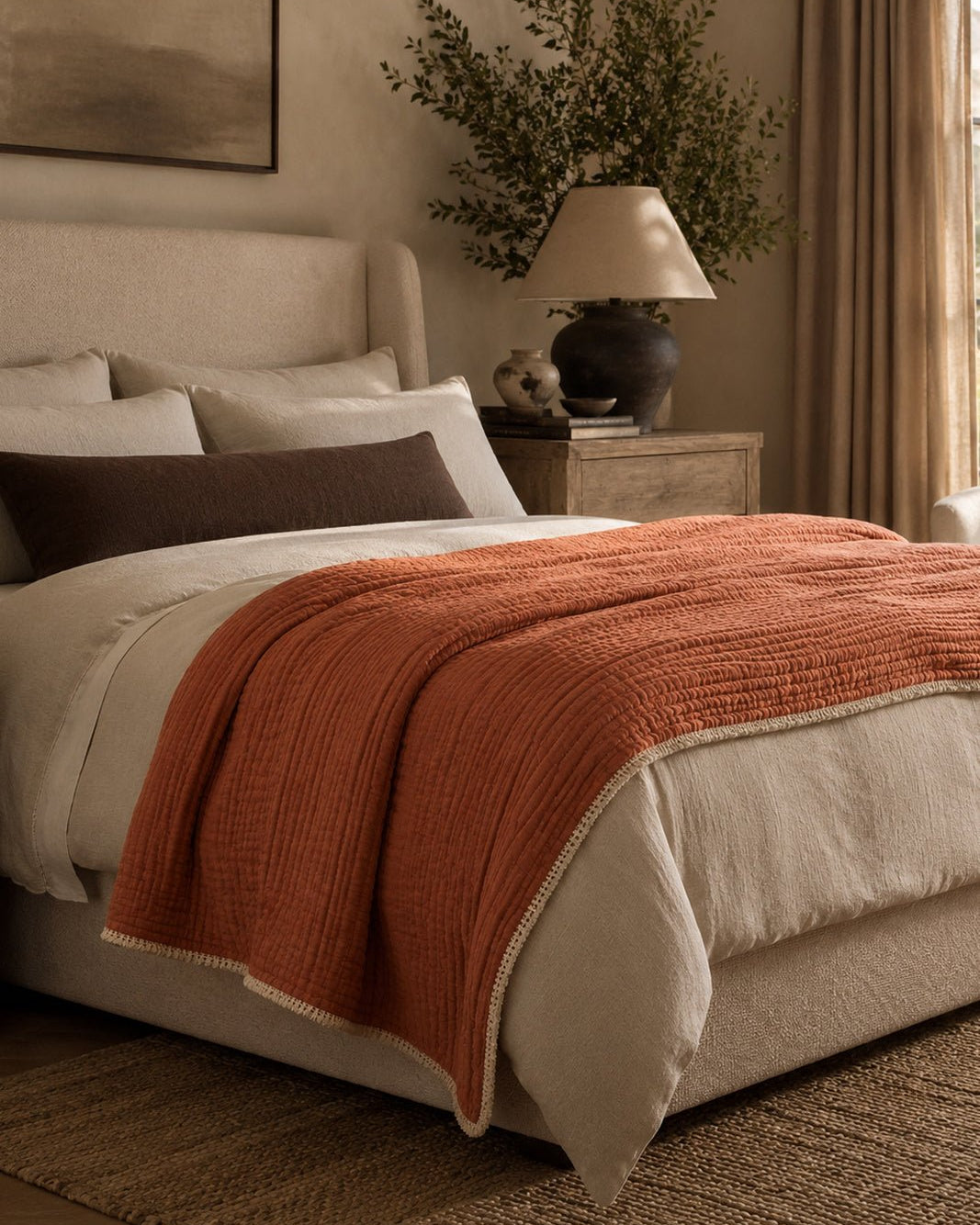
For this kind of flexible layering, Calinea's Coverlets & Quilts Collection includes lightweight Turkish cotton layers designed to bring texture to the bed without unnecessary heaviness.
3. It Balances Softness With Durability
Luxury bedding should not simply feel beautiful when it is new.
It should continue to perform.
Well-spun cotton yarns made from quality fibers can create fabrics capable of withstanding repeated use and laundering while maintaining their comfort and appearance.
This balance between softness and strength is one of the qualities that distinguishes thoughtfully made Turkish cotton bedding.
It also reflects a broader philosophy of luxury: choosing textiles designed to be lived with rather than treated as disposable.
At Calinea, this idea is central to how we think about the home. Natural materials, considered construction and textiles that become part of everyday life are more meaningful than products designed around novelty or short-term trends — the same thinking behind why we remain intentionally small-batch.
4. Turkish Cotton Can Become Softer Over Time
Some bedding feels its softest on the day it comes out of the package.
Natural cotton can behave differently.
Certain Turkish cotton textiles — particularly muslin, gauze and relaxed woven fabrics — often become softer and more supple as they are washed and used.
Repeated laundering can relax the fibers and weave, giving the material an increasingly comfortable hand.
This is why high-quality natural bedding can develop character with age.
Rather than needing to remain perfectly untouched, it is designed to be slept in, washed and enjoyed.
5. It Works Particularly Well for Textured Bedding
Turkish textile traditions encompass far more than smooth cotton sheets.
The versatility of cotton yarn makes it possible to create dimensional bedding with subtle texture and visual depth. This can include:
- Muslin. Lightweight, breathable and characteristically relaxed. Multiple-layer muslin constructions can create softness and dimension without excessive weight. Calinea's Turkish cotton muslin bedding explores this construction through bedding designed around an airy, softly textured feel — and our guide to what muslin bedding is explains the weave in depth.
- Waffle weave. The small recessed pattern of waffle fabric creates both texture and additional surface area. In bedding, waffle weaves can introduce architectural texture while maintaining a relaxed appearance.
- Jacquard. Jacquard weaving allows designs and motifs to be woven directly into a fabric rather than printed onto its surface.
- Textured coverlets. Raised weaves, quilting and layered cotton constructions can create substantial-looking bedding that remains breathable.
For a quiet, layered bedroom, these subtle variations in texture can provide visual interest without relying on bold patterns or synthetic embellishment.
Is Turkish Cotton Bedding Good for Hot Sleepers?
It can be.
Turkish cotton bedding can be an excellent option for warm sleepers when it is made using a lightweight, breathable weave.
However, fiber alone does not determine whether bedding sleeps cool. Fabric construction matters enormously.
A lightweight Turkish cotton muslin sheet and a very dense cotton blanket may both be made from cotton while performing quite differently.
Warm sleepers should generally look for:
- Natural fibers
- Lightweight construction
- Breathable or open weaves
- Minimal synthetic content
- Layered bedding that can easily be adjusted
For particularly warm climates or summer bedrooms, muslin and lightweight cotton coverlets can be especially useful. Our guides to the best bedding for hot sleepers and to why natural fiber bedding sleeps cooler than synthetic go further.
Turkish Cotton vs. Regular Cotton Bedding
The phrase regular cotton encompasses an enormous range of materials.
Cotton can vary considerably depending on where it is grown, the cotton variety, fiber quality, spinning method, weave, finishing and overall manufacturing standards.
High-quality Turkish cotton is sought after because it can combine smoothness, strength and softness particularly well.
When comparing bedding, look beyond the country of origin and consider:
| Feature | What to look for |
|---|---|
| Fiber | High-quality natural cotton |
| Construction | Strong, even yarns and thoughtful weaving |
| Feel | Soft without an excessively artificial finish |
| Breathability | Appropriate weave and weight for your sleeping preferences |
| Durability | Fabric designed for repeated washing and everyday use |
| Materials | Minimal unnecessary synthetic fibers |
| Craftsmanship | Well-finished seams, hems and textile details |
Origin matters, but construction ultimately determines whether a textile performs beautifully. (For a closer look at the fiber itself, see Turkish cotton vs. regular cotton.)
Calinea's Cotton Bedding Collection offers another way to compare how Turkish cotton performs across different bedding constructions.
Turkish Cotton vs. Egyptian Cotton
Turkish cotton and Egyptian cotton are frequently compared because both are associated with premium cotton textiles.
However, neither term guarantees quality on its own.
Egyptian cotton traditionally refers to cotton grown in Egypt and is often associated with extra-long-staple varieties capable of producing extremely fine yarns.
Turkish cotton refers to cotton grown in Türkiye and is widely used across bath and home textiles because of its combination of softness, strength and versatility.
For bedding, the better choice depends less on which name appears on the label and more on the actual fabric. Consider the fiber quality, weave, textile weight, finishing and intended use.
A beautifully woven Turkish cotton muslin coverlet and a smooth Egyptian cotton sateen sheet serve very different purposes even though both can belong in a luxury bedroom.
Turkish Cotton vs. Linen Bedding
Cotton and linen are both natural plant-based fibers, but they create noticeably different textiles.
Linen typically has a drier, more structured hand and a naturally relaxed appearance, while cotton generally feels softer and smoother against the skin.
Blending the two fibers can offer characteristics of both.
Calinea's Linen Blend Bedding Collection combines linen with Turkish cotton, bringing together linen's distinctive texture and breathability with the softer hand of cotton.
This type of blend can be particularly appealing for someone who loves the natural character of linen but prefers a gentler, more immediately comfortable feel. Our side-by-side of linen vs. cotton sheets compares the two in more detail.
Is Thread Count Important for Turkish Cotton Bedding?
Thread count is often treated as a shortcut for bedding quality, but it tells only part of the story.
A higher thread count does not automatically mean better sheets or better cotton. Fiber quality, yarn quality and weave construction can be equally — or more — important.
Extremely high thread-count claims may also involve multi-ply yarns, meaning individual threads are counted in ways that can produce an impressive number without necessarily creating a better fabric.
Instead of shopping by thread count alone, consider:
- Cotton quality
- Fiber length
- Yarn construction
- Fabric weave
- Weight
- Breathability
- Finishing
- How the fabric actually feels
For textured fabrics such as muslin and waffle bedding, thread count may be considerably less useful as a measure of quality than it is for conventional sheets.
Is Turkish Cotton Bedding Considered Luxury Bedding?
True luxury bedding is the result of material quality, craftsmanship, design and performance working together.
A thoughtfully made Turkish cotton textile can embody all four.
For Calinea, luxury is less about excess and more about discernment: natural fibers, tactile materials, timeless palettes and pieces that feel considered within the home.
Turkish cotton fits naturally into that philosophy because it can be transformed into bedding that is simultaneously beautiful, practical and enduring.
What Should You Look for When Buying Turkish Cotton Bedding?
If you are considering Turkish cotton sheets, a duvet cover or a coverlet, look closely at how the product is described.
Check the fiber composition
Look for bedding made predominantly or entirely from natural fibers if natural bedding is important to you.
Look beyond thread count
Pay attention to the weave, cotton quality and construction rather than choosing solely by a large thread-count number.
Consider the weave
Choose the construction according to the experience you want. Muslin creates an airy, relaxed feeling. Smooth woven cotton creates a cleaner appearance. Waffle and jacquard add texture.
Consider textile weight
Heavier does not automatically mean more luxurious. A lightweight Turkish cotton textile can require excellent yarns and sophisticated weaving while providing an intentionally airy feel.
Examine the finishing
Seams, borders, hems, stitching and other finishing details often reveal a great deal about how thoughtfully a textile has been made.
Choose bedding you will actually use
Luxury bedding should make everyday life more comfortable. Choose textiles that suit the way you sleep, the climate where you live and the amount of layering you prefer.
Those differences are worth comparing across Calinea's natural bedding collections, where different fibers and constructions offer distinctly different sleeping experiences.
How to Care for Turkish Cotton Bedding
Always follow the care instructions provided with the individual textile because constructions and finishes vary.
As a general principle, gentle laundering helps preserve natural-fiber bedding. Avoid excessive heat when it is unnecessary, and be cautious with heavy use of fabric softeners, which can leave coatings on textile fibers.
Some natural cotton bedding may also change subtly after laundering.
That is not necessarily a flaw.
Relaxed weaves can develop additional texture and softness as they are washed, contributing to the comfortable, lived-in character that makes natural bedding distinctive. Our full guide to washing and caring for natural fiber bedding covers the routine step by step.
Why Turkish Cotton Has a Place in the Natural Bedroom
As bedrooms move away from overly coordinated bedding sets and toward layered, tactile interiors, natural textiles have become increasingly important.
Turkish cotton works particularly well in this environment.
It can be crisp or relaxed. Lightweight or substantial. Smooth or highly textured.
Most importantly, it provides these possibilities using a natural plant-based fiber.

Layering different cotton constructions — a smooth duvet cover with a muslin coverlet, for example — can create depth through texture rather than unnecessary decoration.
The result is a bedroom that feels quiet, comfortable and intentional.
That is also what defines Calinea's approach to bedding: natural materials, considered texture and understated design intended to remain relevant beyond a single season.
Frequently Asked Questions About Turkish Cotton Bedding
Is Turkish cotton good for bedding?
Yes. High-quality Turkish cotton can produce soft, breathable and durable bedding. Its performance depends on the quality of the cotton as well as the yarn, weave, textile weight and finishing.
Is Turkish cotton bedding soft?
Turkish cotton can be exceptionally soft. Some relaxed Turkish cotton fabrics, including muslin and gauze, can become increasingly supple with washing and regular use.
Is Turkish cotton breathable?
Yes. Cotton is naturally breathable, although the degree of airflow depends greatly on how densely the fabric is woven. Lightweight Turkish cotton constructions are particularly well suited to breathable bedding.
Is Turkish cotton better than regular cotton?
Not automatically. Turkish cotton can be extremely high quality, but cotton origin alone does not determine the quality of bedding. Fiber quality, yarn, weave and manufacturing all matter.
Is Turkish cotton better than Egyptian cotton?
Neither is universally better. Both can be used to produce premium bedding. Egyptian cotton is often associated with exceptionally fine, long fibers, while Turkish cotton is valued for its softness, strength and versatility. The construction of the final textile matters more than the name alone.
Does Turkish cotton get softer after washing?
Many Turkish cotton textiles become softer and more relaxed through repeated washing and use, particularly muslin, gauze and other naturally textured constructions.
Is Turkish cotton bedding good for summer?
Lightweight Turkish cotton bedding can be particularly comfortable during warmer weather because cotton is breathable and can be woven into airy fabrics. The weave and weight of the textile should always be considered.
Is Turkish cotton bedding natural?
Turkish cotton itself is a natural plant-based fiber. Check the complete fiber composition of individual bedding products, however, because some fabrics may blend cotton with synthetic or other fibers.
The Calinea Perspective
The best bedding rarely needs to announce itself.
You notice it in the way the fabric feels against the skin, the way natural texture catches the light and the way a beautifully made textile becomes softer and more familiar with time.
This is where Turkish cotton distinguishes itself.
Its ability to become smooth, airy, dimensional or substantial depending on the weave makes it an extraordinarily versatile material for the bedroom.
For those building a home around natural materials, enduring design and quiet luxury, Turkish cotton bedding offers something increasingly valuable: comfort without excess, beauty without unnecessary ornament and quality intended for everyday life.
Shop Turkish cotton bedding · Muslin bedding · Coverlets & quilts
Refined living, naturally.