
What Is Cold-Process Soap? A Guide to Handmade Turkish Soap Bars
Pick up a handmade bar of soap after years of supermarket soap and the difference is immediate. It feels softer in the hand, lathers more gently and leaves skin feeling less tight. Most of that comes down to one thing: how the soap is made. This guide explains cold-process soap, how to choose a bar for your skin and how to make it last.
What is cold-process soap?
All true soap is made by combining oils with lye and water. In cold-process soapmaking, this happens at a low temperature. The soap is poured into molds, cut by hand and then left to cure for several weeks while it slowly hardens and becomes milder.
Most commercial bars are made differently: soap is produced at scale with heat, then milled and pressed into uniform shapes. That process is fast and consistent, but it often removes the naturally formed glycerin and relies on additional detergents for foam.
A cold-process bar keeps its natural glycerin, which is a big part of why it feels gentler. The trade-off is that it is a little softer and needs to dry out between uses.
What does “superfat” mean?
Soapmakers calculate how much lye is needed to turn the oils into soap, then deliberately use a little less. The extra oil that stays in the finished bar is called the superfat. Our bars are made with a 5% superfat, so a share of the oils remains in the soap rather than being converted. It is part of why a cold-process bar leaves skin feeling softer than a commercial one.
Why handmade soap lathers differently
Big, airy foam usually comes from added detergents, not from cleaning power. Cold-process soap, and especially olive oil soap, makes a lower, creamier lather. Give it a few seconds longer and it does the same work. Our bars are free from SLS.

The tradition of Turkish olive oil soap
Olive oil soap has been made and used in Turkish homes for generations. Our Extra Virgin Olive Oil bar follows that tradition with just two ingredients: olive oil and water. No coconut, no palm, no color and no added scent. It is the plainest bar we make and the one we suggest starting with if your skin is sensitive or you are unsure what suits it.
How to choose a soap bar for your skin
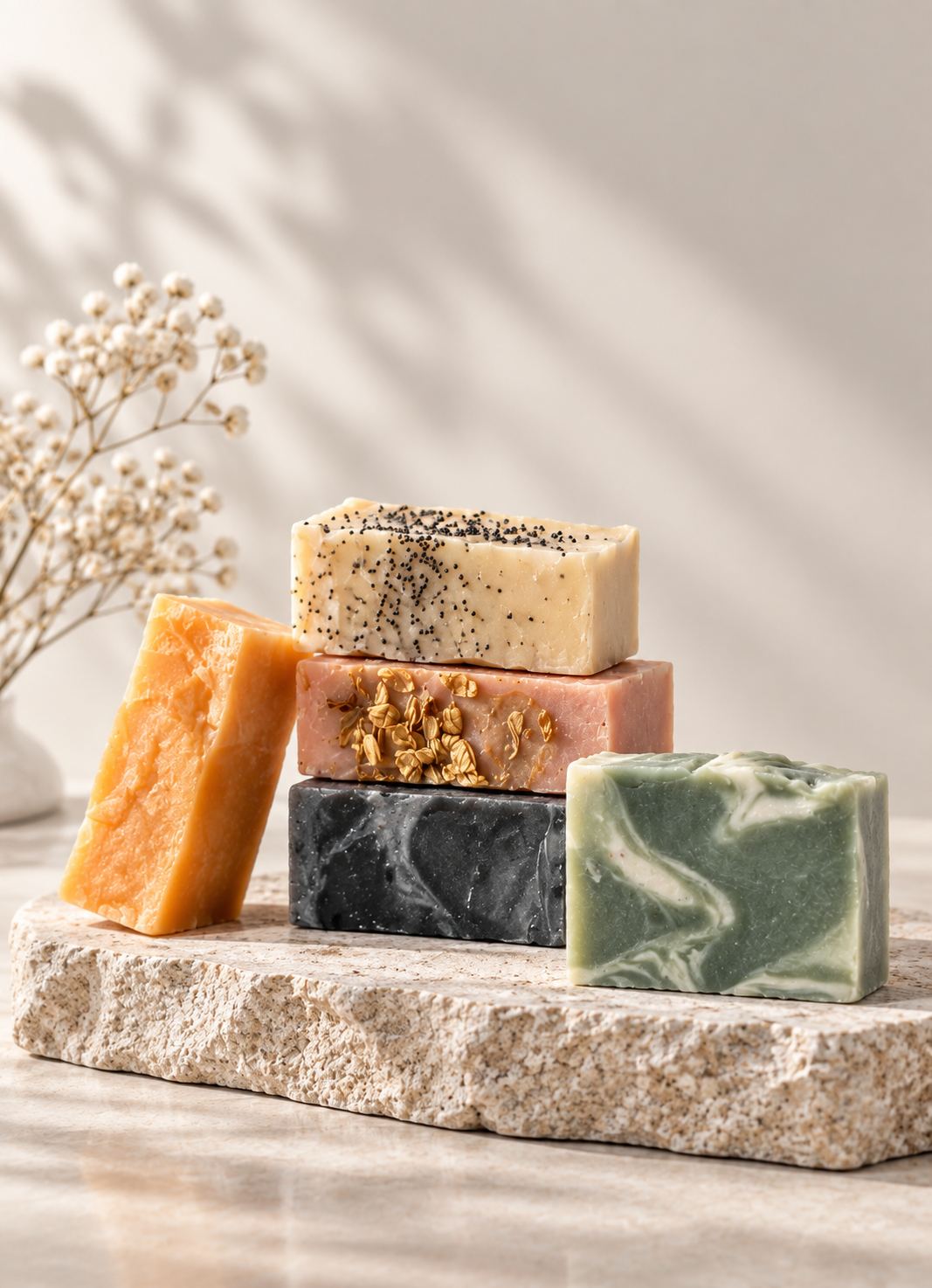
Each of our bars is made in small batches in Türkiye, cold-process, about 110 g, and cut by hand. They differ in their oils and additions:
| If your skin is… | Try | Why |
|---|---|---|
| Sensitive or reactive | Extra Virgin Olive Oil | Single oil, no scent, no nuts, no dairy |
| Easily irritated, prefers no fragrance | Kefir & Oatmeal | Mild, unscented, with oats for gentle texture |
| Dry or tight-feeling | Argan or Donkey Milk | The two richest bars in the range |
| Normal to slightly dry | Apricot Kernel Oil or Honey & Almond | Softening without feeling heavy |
| Oily or combination | Activated Charcoal & Goat Milk or Kefir, Bentonite Clay & Hibiscus | Clarifying, balanced with milk or kefir |
| Normal, and you choose by scent | Yoghurt & Lavender or Jasmine | Lavender is quiet; jasmine is the most floral |
| Normal to dry, want a bar that looks beautiful | Pomegranate Seed Oil | A firm, deep-red bar with a fine lather |
Allergy note: many of our bars contain sweet almond oil, and several contain milk, kefir, yoghurt or honey. Each bar's page lists its full ingredients and allergens; please check before buying, and patch test first if your skin is sensitive.
Shampoo bars: how they work
A shampoo bar replaces a bottle of shampoo, travels without leaking and lasts roughly fifty to sixty washes. To use one, wet your hair, rub the bar along your scalp two or three times, work the lather through with your fingers and rinse thoroughly.
If you are used to detergent shampoo, give your hair two or three washes to adjust; it may feel heavier at first, especially in hard water. Rinse longer than feels necessary. We make two:
- Laurel & Avocado Oil: made with laurel oil, the ingredient long used in Aleppo-style soap. For normal to dry hair.
- Bittim (Terebinth): made with oil pressed from the fruit of the wild terebinth tree of south-eastern Türkiye, with a green, resinous scent. For oily scalps.
Both should be treated as containing tree nuts; see each page for details.
How to make a handmade soap bar last
A cold-process bar holds more water than a commercial one, so it softens quickly if it sits in a puddle. Used daily in the shower, one bar lasts about six to eight weeks if it can dry between uses; left in standing water, it can be gone in under three.
- Keep it on a draining dish, away from the direct spray.
- Let it dry fully between uses.
- Store spares unwrapped in a drawer, where they keep well and scent it lightly.
A soap set makes an easy gift
A set of handmade bars is one of the simplest gifts to get right. Our Botanical Soap Set comes in three fixed sizes:
- 4 bars (Essentials): the four plainest bars. The safe choice when you don't know someone's taste.
- 8 bars (Discovery): adds two clarifying bars, Pomegranate and Argan.
- 12 bars (Full Collection): the whole body range plus the Laurel & Avocado shampoo bar. A good new-home or wedding gift.

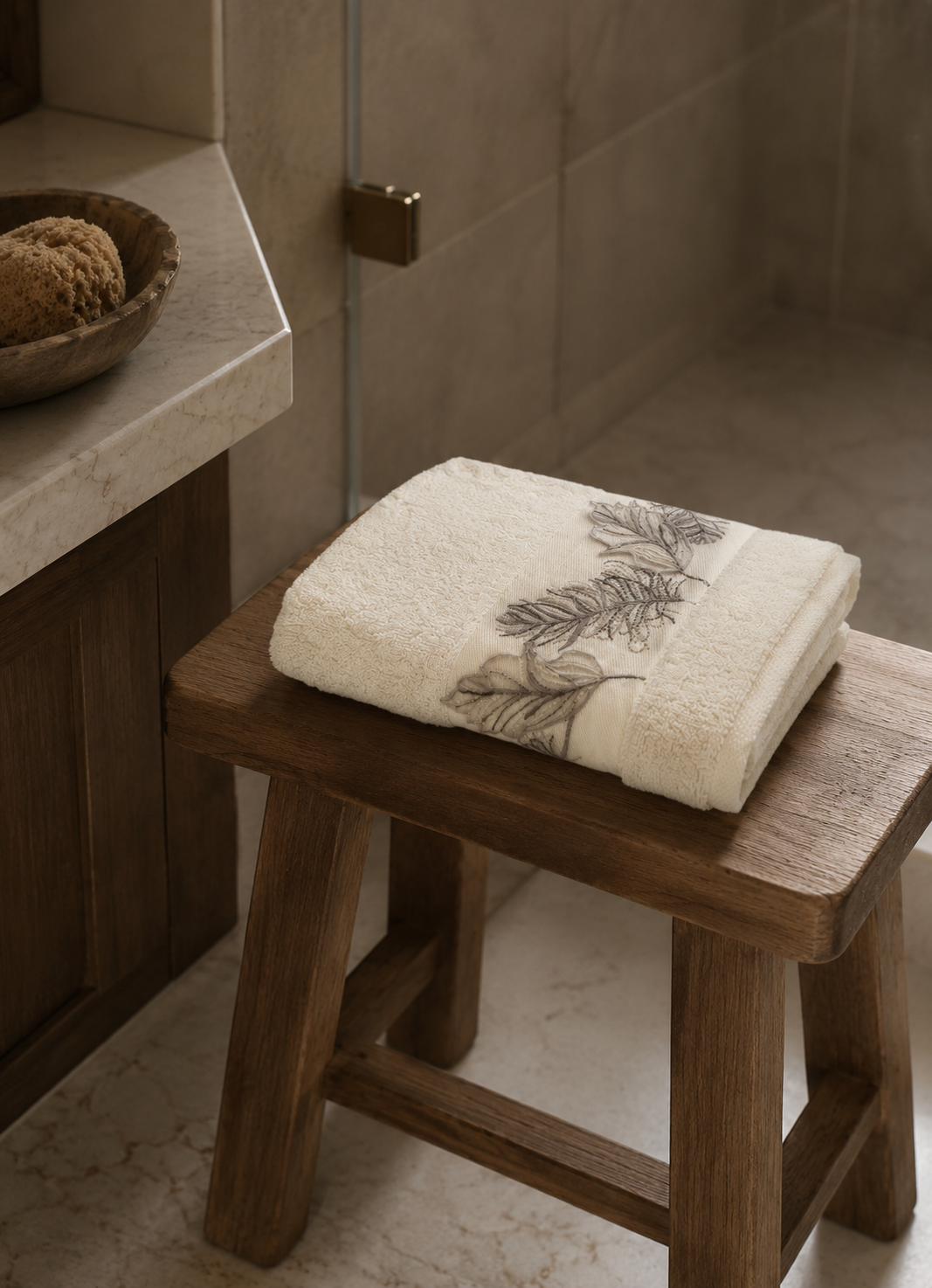
Pair a set with a few good towels for a complete bath gift, or set a new bar out in the guest bathroom; see our guest room checklist.
Frequently asked questions
Is cold-process soap better for your skin?
Many people find it gentler. A cold-process bar keeps its natural glycerin and, with a superfat, some unconverted oil, so it tends to leave skin feeling less tight than commercial soap.
Why is my handmade soap softer than store-bought soap?
A cold-process bar holds more water and keeps its glycerin. Keep it on a draining dish and let it dry between uses and it will firm up and last much longer.
How long does a bar of handmade soap last?
About six to eight weeks of daily shower use if it dries between uses. A shampoo bar lasts roughly fifty to sixty washes.
Can I use bar soap on my face?
Yes, with the right bar. Extra Virgin Olive Oil is the one to start with if your skin is reactive; Apricot Kernel Oil is the richer bar most people find comfortable on the face.
Does handmade soap contain allergens?
It can. Many natural bars use nut oils, milk or honey. Always check the ingredient list; ours is on every product page.
The bottom line
Cold-process soap is made slowly, at low temperature, and keeps the glycerin and a little of the oil that commercial soap removes. Choose a bar by your skin and the scent you like, keep it on a draining dish, and one bar will last for weeks.